

How to Use the Centering Prayer Throughout Your Day
Last blog I shared a meditation/prayer practice with you called the centering prayer. If you missed it, here’s a link to the post. The centering prayer is a wonderful example of a powerful tool that you can apply both -into your regular meditation practice AND in your everyday, going about town life. As a quick review, here’s the basic idea:
Last blog I shared a meditation/prayer practice with you called the centering prayer. If you missed it, here’s a link to the post.
As a quick review, here’s the basic idea:
1. Choose a word (or phrase) to focus on during your meditation.
2. Ensure that you’re sitting comfortably with your eyes closed.
Begin repeating the word or phrase silently to yourself over and over again slowly. Deepen into the phrase, slowly and intentionally, giving your thought-mind something to focus on. If your phrase is: “I rest in God,” begin by saying that phrase. Eventually it may become “I rest,” or “God” that gets repeated as you slow down and deepen into the words.
3. Whenever you get distracted by another thought or body sensation, simply return to your word or phrase.
How do you then extend this practice to your day!?
It’s easy!
You’re gardening. Allow your mind to tune into your word or phrase. Repeat it over and over to yourself silently or aloud.
You’re driving. Same thing. Bring your thoughts back to your word or phrase. Keep repeating it. If you get sidetracked, simply come back.
You’re upset after reading an article about _____ (fill in the blank). Invite your word or phrase to come into your awareness. Continue to repeat it. Notice if your nervous system calms down.
And on and on, throughout your day.
The centering prayer is a wonderful example of a powerful tool that you can apply both -into your regular meditation practice AND in your everyday, going about town life.
Pick a phrase and give it a try!
Want more tools to help you manage the chaos of the world?
Sign up today and get them directly in your inbox every Wednesday, FREE!
Image courtesy of Tabitha Turner on Unsplash

Experiencing Well-Being Part III
We’re already at the 3rd pillar of well-being!
As a quick review, the first two are:
1.Awareness
-Meaning, the ability to be more present, tuned into your here and now as well as to your mind chatter.
From Dr Davidson directly:
“Awareness: A heightened, flexible attentiveness to one’s environment and internal cues such as bodily sensations, thoughts, and feelings.
Skills: Mindfulness, attention, self-awareness”
We’re already at the 3rd pillar of well-being!
As a quick review, the first two are:
1.Awareness
-Meaning, the ability to be more present, tuned into your here and now as well as to your mind chatter.
From Dr Davidson directly:
“Awareness: A heightened, flexible attentiveness to one’s environment and internal cues such as bodily sensations, thoughts, and feelings.
Skills: Mindfulness, attention, self-awareness”
2. Connection
– How we are in relationship to ourselves, to others, and to the larger world around us.
From Dr Davidson directly:
Connection: A feeling of care and kinship toward other people, promoting supportive relationships and supportive interactions.
Skills: Appreciation, kindness, compassion
And 3?
Insight
One way to think about insight is that you are the hero of your own story. What are your values, beliefs, expectations? How do you even define your ‘self’?
Insight in this context, is the ability to bring curiosity and objectivity to this idea of ‘self’. Can you be- to think about this in a Buddhist way- the witness to your ‘self’? Can you observe your ‘self’ from a different, neutral perspective?
If you’re willing to do this level of introspection, you may begin to see how the ways you define yourself are based on learned behaviors and societal / familial norms that contribute to how you experience/perceive the world.
Interestingly, the invitation with this isn’t to necessarily change the narrative you have defined for yourself, but to be willing to wear it more lightly, to recognize that you can look at yourself and the world differently.
Why is this?
The science indicates that having a more rigid, inflexible construct of who you are is linked with higher levels of anxiety and depression. Conversely, people who tend to be growth-oriented experience more well-being.
One way to play with this concept is to identify a feeling you’re having in a moment. Take this moment right now. What are you feeling?
Apathy, curiosity, confusion, overwhelm…
Allow yourself to have curiosity about it.
Why am I feeling this?
Does it have a root in something I experienced externally or is it related to a thought I just had?
Dr Davidson refers to this type of inquiry as a form of insight related deconstructive inquiry/meditation. His research notes that people who meditate on this particular concept show “enduring changes in self-related processing in the brain.”
Pretty cool.
Give it a try and see what you think!
Want more tools to manage the chaos and uncertainty?
Sign up today and get them direct to your inbox every Wednesday, FREE!
Image courtesy of Abdul Mustafa on Unsplash
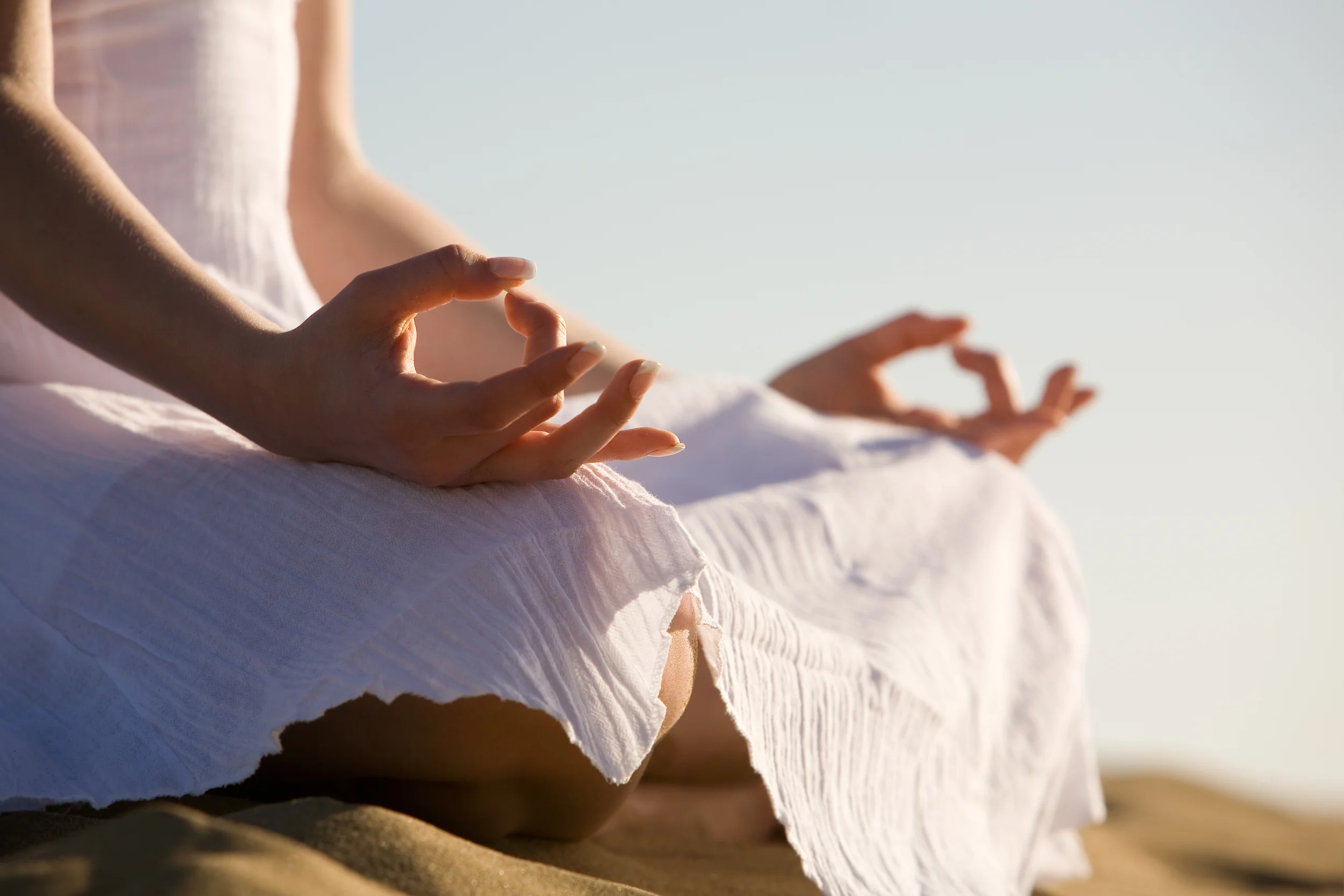
The Power of Presence: Daily Mindfulness
We hear a lot about being mindful not just within spiritual circles but more and more in the work place.
What exactly is mindfulness?
Mindfulness stated simply is awareness of the present or the ability to be present in all aspects of our lives.
It’s a honing of the mind to focus on what is happening right now.
Since the 1970s, there’s been a growing recognition and movement towards embracing mindfulness.
This is due in large part to the many Buddhists teachers who have come to the United States over the past few decades as well as the American practitioner, Jon Kabat-Zinn, who began teaching mindfulness courses in 1979.
The first time I recognized mindfulness occurring in my life was shortly after I met my first husband. He’s from Bali and since he's Hindu, learned meditation at a young age.
Part of what had attracted me to him in the first place was his calm demeanor and indefatigable kindness.
The day I noticed his mindfulness in action, we were in Indonesia visiting his family.

There's a lot of talk about mindfulness not just within spiritual circles but more and more in the work place.
What exactly is mindfulness?
Mindfulness stated simply is awareness of the present or the ability to be present in all aspects of our lives.
It’s a honing of the mind to focus on what's happening right now.
Since the 1970s, there’s been a growing recognition and movement towards embracing mindfulness in the United States.
This is due in large part to the many Buddhists teachers who have come here over the past few decades as well as the American practitioner, Jon Kabat-Zinn, who began teaching mindfulness courses in 1979.
The first time I recognized mindfulness occurring in my life was shortly after I met my first husband. He’s from Bali and since he's Hindu, learned meditation at a young age.
Part of what had attracted me to him in the first place was his calm demeanor and indefatigable kindness.
The day I noticed his mindfulness in action, we were in Indonesia visiting his family.
We’d rented a van to take his extended family on a picnic in the mountains. I looked over at him and suddenly realized that the only thing he was doing in that moment was driving.
He wasn’t thinking about the party last night.
He wasn’t going over the stuff he’d packed, making sure he’d remembered everything.
Nor was he distracted by the conversation in the back seat.
He was just driving, focusing on the vehicle, and the road ahead. He was 100% present in that moment to his task- present and focused.
I resolved then that I wanted to develop this quality.
And I discovered that mindfulness is achieved through meditation and the internal gardening of our thoughts.
Here’s what’s helped me develop a practice of mindfulness:
1. Meditation
I started meditating 20 years ago. I still meditate today because it feels so good to release the stress of the world. It helps me remember that there is more going on than the chaos that circles around me.
I sit in silent meditation because it provides me with solace and connecting to infinite source feeds me. I meditate to remember my essential nature. Finally, I sit to bring myself into the now and that helps me bring the silence, serenity and clarity into my working day.
2. Mining the Mind
I like to think of myself as a gardener of my mind. I pluck out all the thoughts that distract me or are taking me out of the present moment.
I also pull out the thoughts (like weeds) that are harmful to me or remind me of old stories and ancient beliefs about limitation and lack that are no longer true for me.
3. Coming Fully Into My Body
Being grounded in my physical body helps me experience the here and now.
I can feel where I am- the sun on my face, the wind whipping around me. I see where I am- the trees bordering the road, the faces of people walking by. I hear the world around me- the birds chirping, the trucks rumbling, children laughing.
Being in my body allows me to fully experience life.
Life is only happening right now, in this moment.
When we leave the moment by getting distracted by our thoughts, we lose the opportunity to experience what it feels to really be alive. We can easily get caught fixating about a past hurt or worrying about a future concern.
But when we can bring our focus back to this moment, we have the opportunity to heal.
Consider starting your mindfulness practice today.
Find a comfortable spot in your home where you can sit for just five minutes in the morning. Focus on your breath coming in and out.
I like to count to 11. Inhaling 1, exhaling 2 until I get to 11 and then starting over.
If you lose track, start over at 1. Before you know it, your timer will be ringing. You’ll be surprised at how quickly 5 minutes flies by!
As you commit to this daily practice of meditation, it will help you be able to listen to your mind and hear the way you speak to yourself.
Then you can decide what thoughts you want to keep and ones that need to be pulled out. And it will help you experience a greater sense of presence in your body.