

How to Use the Centering Prayer Throughout Your Day
Last blog I shared a meditation/prayer practice with you called the centering prayer. If you missed it, here’s a link to the post. The centering prayer is a wonderful example of a powerful tool that you can apply both -into your regular meditation practice AND in your everyday, going about town life. As a quick review, here’s the basic idea:
Last blog I shared a meditation/prayer practice with you called the centering prayer. If you missed it, here’s a link to the post.
As a quick review, here’s the basic idea:
1. Choose a word (or phrase) to focus on during your meditation.
2. Ensure that you’re sitting comfortably with your eyes closed.
Begin repeating the word or phrase silently to yourself over and over again slowly. Deepen into the phrase, slowly and intentionally, giving your thought-mind something to focus on. If your phrase is: “I rest in God,” begin by saying that phrase. Eventually it may become “I rest,” or “God” that gets repeated as you slow down and deepen into the words.
3. Whenever you get distracted by another thought or body sensation, simply return to your word or phrase.
How do you then extend this practice to your day!?
It’s easy!
You’re gardening. Allow your mind to tune into your word or phrase. Repeat it over and over to yourself silently or aloud.
You’re driving. Same thing. Bring your thoughts back to your word or phrase. Keep repeating it. If you get sidetracked, simply come back.
You’re upset after reading an article about _____ (fill in the blank). Invite your word or phrase to come into your awareness. Continue to repeat it. Notice if your nervous system calms down.
And on and on, throughout your day.
The centering prayer is a wonderful example of a powerful tool that you can apply both -into your regular meditation practice AND in your everyday, going about town life.
Pick a phrase and give it a try!
Want more tools to help you manage the chaos of the world?
Sign up today and get them directly in your inbox every Wednesday, FREE!
Image courtesy of Tabitha Turner on Unsplash

How to Have a Centering Prayer Practice
Today I have a cool meditation/prayer for you. It’s called the centering prayer. It’s a way of praying that allows us to loosen our minds from thought and enter that transcendental space that can often feel elusive.
August was BUSY! How about you?
Today I have a cool meditation/prayer for you.
It’s called the Centering Prayer.
The Christian contemplative, Cynthia Bourgeault, has written extensively about this practice and teaches this technique around the world! It’s a way of praying that allows us to loosen our minds from thought and enter that transcendental space that can often feel elusive.
She shares that this practice was popularized by Father Thomas Keating, a Trappist priest. He was one of the first people to promote the Centering Prayer which is based on a 14th century Christian mystical text called The Cloud of Unknowing.
Here’s the basic idea:
Choose a word (or phrase) to focus on during your meditation.
Ensure that you’re sitting comfortably, with your eyes closed. Begin repeating the word or phrase silently to yourself over and over again slowly. This is different than a mantra where you continually repeat the word. It’s more of a deepening into the phrase, slow and intentional. The idea is to give your thought-mind something to focus on. So, for example, if your phrase is: “I am love,” you begin by saying that phrase, eventually it may become “I am,” or “love” that gets repeated as you slow down and deepen into the words.
Whenever you get distracted by another thought or body sensation, the invitation is to return to your word/phrase.
Continue repeating it. What Bourgeault explains in her book, The Heart of Centering Prayer: Nondual Christianity in Theory and Practice, is that the slow repetition helps you relax into that liminal space, much like how you might fall asleep, when your mind shifts from one state into another.
The recommendation is to do this for 20 minutes. Father Keating suggested practicing it twice a day.
I’ve been utilizing it, and finding it really helpful. It’s both gentle and structured, which I like!
Here’s an adapted excerpt from Bourgeault’s book about this practice:
So are we really saying that in Centering Prayer you meditate by simply letting go of one thought after another?
That can certainly be our subjective experience of the practice, and this is exactly the frustration expressed by an early practitioner.
In one of the very earliest training workshops led by Keating himself, a nun tried out her first twenty-minute taste of Centering Prayer and then lamented, “Oh, Father Thomas, I’m such a failure at this prayer. In twenty minutes, I’ve had ten thousand thoughts!”
“How lovely,” responded Keating, without missing a beat. “Ten thousand opportunities to return to God.”
This simple story captures the essence of Centering Prayer.
It is quintessentially a pathway of return in which every time the mind is released from engagement with a specific idea or impression, we move from a smaller and more constricted consciousness into that open, diffuse awareness in which our presence to divine reality makes itself known along a whole different pathway of perception.
That’s what the anonymous author of the fourteenth-century spiritual classic The Cloud of Unknowing may have had in mind when he wrote, “God may be reached and held close by means of love, but by means of thought never.”
“Love” is this author’s pet word for that open, diffuse awareness which gradually allows another and deeper way of knowing to pervade one’s entire being.
Out of my own four decades of experience in Centering Prayer, I believe that this “love” indeed has nothing to do with emotions or feelings in the usual sense. It is rather the author’s nearest equivalent term to describe what we would nowadays call nondual perception anchored in the heart.
Want more tools to help you manage the chaos of the world?
Sign up today and get them directly in your inbox every Wednesday, FREE!
Image courtesy of Tabitha Turner on Unsplash

Love: The Antidote to Tragedy
know I’m not alone in feeling despondent about the tragic and brutal murder of 49 innocent people on Sunday morning in Orlando.
For two days I was in denial about it. I just didn’t want to feel it, believe it was real. That someone could voluntarily harm innocent people right here in my own back yard.
And yet daily, the news is filled with stories like this. Of violence in every country, and city, affecting all walks of life.
So how, as sensitive, loving people, do we face tragedy and not shy away, give up or become hostile?
Love.
I know I’m not alone in feeling despondent about the tragic and brutal murder of 49 innocent people on Sunday morning in Orlando.
For two days I was in denial about it. I just didn’t want to feel it, believe it was real, that someone could voluntarily harm innocent people right here in my own back yard.
And yet daily, the news is filled with stories like this - of violence in every country, and city, affecting all walks of life.
So how, as sensitive, loving people, do we face tragedy and not shy away, give up or become hostile?
Love.
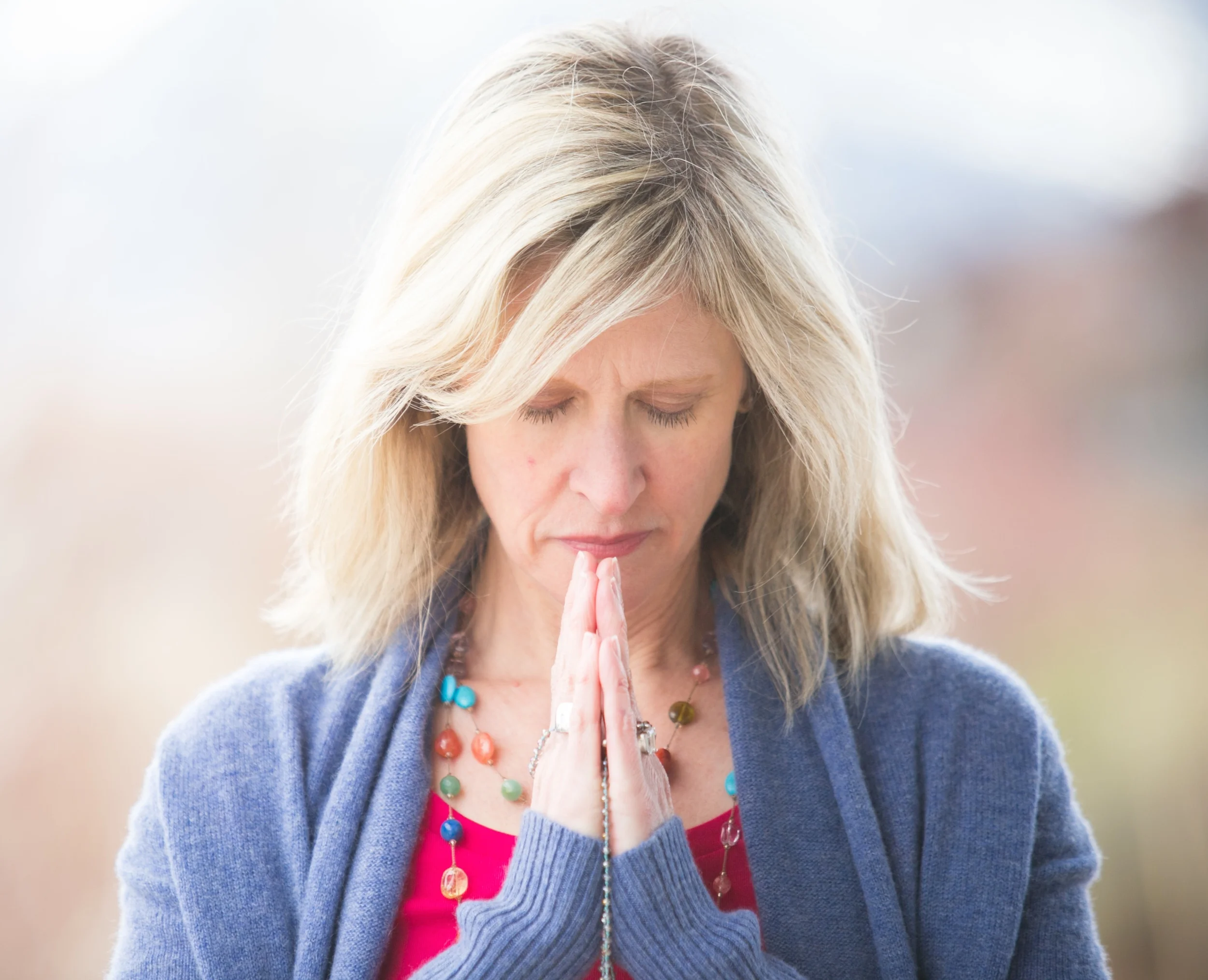
Every day I pray for peace. I pray that our world will shift from a paradigm of fear and lack to one of unlimited abundance and unconditional love.
I know I’m not alone. I know that most of us want that too.
We, the silent majority, want a life of peace.
We not only accept but embrace each other for our differences. We celebrate diversity – in all its varied forms- as part of the glorious manifestation of life.
And yet when tragedy hits, it’s easy to become scared, silent, stay at home, hunker down.
But how can love win if we all hide?
Instead, each one of us has an obligation to act in love.
What can we do?
1. Stand Up
Many cities have already organized marches and other events. Check out what’s happening in your area both civically and at local places of faith. See how you can get involved.
Where I am, there is an interfaith service and candle light vigil. I currently live 90 miles from Orlando so my community has been hit hard.
2. Speak Up
We need to fight for sane, common sense gun laws. How many innocent lives must be lost before we, as a country, finally say enough?
Sign a petition, or even better, call your local representative.
Tell him or her that it’s time we end this cycle of violence, time to terminate loop holes that allow people who are mentally unstable or are known to have associated with terrorist groups to legally purchase semi-automatic weapons.
You have more power than you realize. And believe it or not, politicians actually work for you. Let them know that this needs to stop NOW.
3. Lead by Example
Many of us who are parents wonder how to explain hatred and violence. Lately it feels like life just gets more insane. But then I have to remind myself of other times, when life was filled with uncertainty and chaos.
Embody love, tolerance and acceptance.
How can you show your compassion and kindness today?
Children learn best through example. So instead of despairing or saying, "that’s the way it is and we can’t do anything," take a stand. Bring your kids to a march, a vigil or let them know that you are calling on congress to make changes.
Be empowered and your children will too. This way, love will win.
4. Pray
I invite you to join me to pray for peace not only in your country but across the world.
May all sentient beings be free from suffering, and have adequate food, clothing, shelter and habitat. May we shift from a paradigm of fear and lack to one of love, abundance, acceptance and sustainability.
Envision the world as whole and healed. All of life is thriving in a safe, loving and pollution free world.
Here is a link to help you take action.