

Affirmation Challenge in Honor of Louise Hay
Louise Hay’s birthday is this month and she is considered the “Queen” of affirmations. She literally transformed her life by saying them. She overcame cancer, supported countless others and created a self-help empire.
Not only did she say affirmations, she lived them.
As you likely know, affirmations are positive statements. They are a powerful tool to control your thoughts and ultimately transform your life.
Because when you control your thoughts, not only do you feel happier and more successful, you also create a better future! Wahoo!
Louise Hay’s birthday is this month and as you may know she is considered the “Queen” of affirmations. She literally transformed her life by saying them. She overcame cancer, supported countless others and created a self-help empire.
Not only did she say affirmations, she lived them.
Affirmations are positive statements. They are a powerful tool to control your thoughts and ultimately transform your life.
Because when you control your thoughts, not only do you feel happier and more successful, you also create a better future! Wahoo!
But here’s the thing about affirmations.
When you first start saying one, it may feel like bull sh**. Like you don’t believe it at all. And guess what? That’s okay! Say it anyway.
And observe what happens.
Do you feel resistance?
If so, are you willing to explore that discomfort? If you are, you might be surprised at what you learn!
I did this recently with some depressed feelings I was struggling against. I was working really hard to keep my head above the water, or the depressed feelings were going to pull me under. And then one day I thought, what would happen if I just let it take me? And you know what? The depressed feelings went away!
I share this because our resistance to uncomfortable feelings can actually be feeding them rather than helping us manage them!
So if you find that an affirmation is hard for you – I encourage you to go into it. See what’s there to learn.
Your happiness, your wellbeing, your peace of mind are all linked to the thoughts you think.
This is the power of affirmation.
So what better way to honor Louise Hay than to embrace an affirmation?
The first affirmation she ever used was: “I am beautiful and everybody loves me.”
If you don’t resonate with that one, what about:
“Love surrounds me and protects me.”
“Life loves you.”
Or one of my particular faves, “I am safe in the universe and all of life loves and supports me.”
Whatever you choose, stick with it for a week or a month! Honor yourself and Louise by bringing more positivity to yourself and the world.
Liked what you read?
Get more tools and inspiration in your inbox every Wednesday!
Image by Pexels

A Simple Way to Move Into Forgiveness
According to A Course in Miracles, forgiveness is our only function.
Forgiveness sounds easy but can seem awfully difficult to actually do.
A great tool that has really helped me on my journey to forgiveness was one that I learned from Louise Hay.
Louise Hay shares many affirmations focused on and about forgiveness.
One of my personal favorites is when she talks about the willingness to forgive.
Sometimes we’re in a situation where the hurt, anger or upset seems too much to let go of and for whatever reason we aren’t ready to forgive. This is when willingness is a great bridge.
Willingness to forgive opens the door. We don’t have to walk through it yet, but it offers us another possibility.
Willingness allows us to expand and gives us the potential to move beyond the hurt- in our own time, when we are ready.
Willingness is an opportunity for something new to unfold.

According to A Course in Miracles, forgiveness is our only function.
Forgiveness sounds easy but can seem awfully difficult to actually do.
A great tool that has really helped me on my journey to forgiveness was one that I learned from Louise Hay.
Louise Hay shares many affirmations focused on and about forgiveness.
One of my personal favorites is when she talks about the willingness to forgive.
Sometimes we’re in a situation where the hurt, anger or upset seems too much to let go of and for whatever reason we aren’t ready to forgive. This is when willingness is a great bridge.
Willingness to forgive opens the door. We don’t have to walk through it yet, but it offers us another possibility.
Willingness allows us to expand and gives us the potential to move beyond the hurt- in our own time, when we're ready.
Willingness is an opportunity for something new to unfold.
Sometimes we can get attached to the pain. It just becomes familiar and we get ensnared in it without realizing it. Willingness offers a wedge and provides some space between us and the pain. Sometimes, that’s all we need, a little space to help us re-direct and refocus.
Willingness is a great first step in letting go of anger and upset.
Here’s the thing. The person with whom I’m upset has no idea. He can be walking around happy and carefree while I’m sitting in a place of misery - unhappy, angry and seething.
Who is really suffering? I want this other person to suffer, but the reality is that I’m the one in pain.
Forgiveness sets us free from this jail cell of negative thoughts and feelings.
The next time you find yourself face-to-face with anger about an injustice you’ve experienced and you aren’t quite ready to let it go, ask yourself. “Am I willing to forgive?” See if those five words can help open the door to a shift and enable you to begin the process of releasing yourself from the pain.
Let me know if this helps you!
Leave me a comment below the blog.
Sign up today to join our growing community.
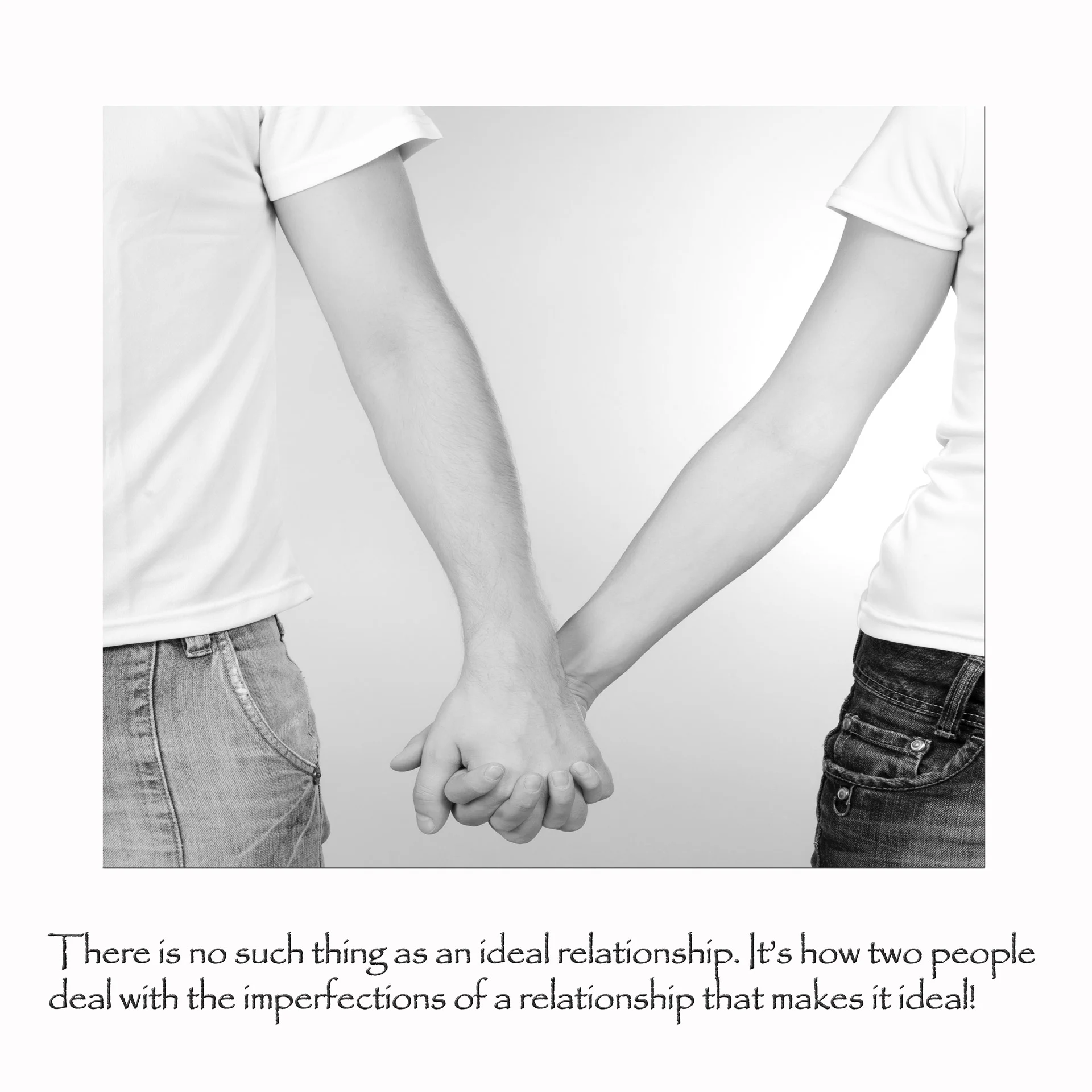
You Want Me?
A few weeks ago I watched Annie Hall, the Woody Allen movie starring Diane Keaton and Woody Allen. I hadn't seen it in over 30 years and probably laughed harder and appreciated it more this time around.
The movie essentially is a study in Alvy Singer's (played by Woody Allen) rejection of the women in his life because he can't possibly fathom why they would want to be with him let alone love him.
He even likens it to the old Groucho Marx joke, " I don't care to belong to any club that will have me as a member."
In the film, we watch as Alvy systematically sabotages his relationships only to then regret it after they're over.
But then something weird happened. I actually started to see this same pattern playing out with people I knew in my everyday life. Twice I witnessed one partner goading the other, speaking harshly almost like the desire was to reject, push away, or create cause for a break up.
A few weeks ago I watched Annie Hall, the Woody Allen movie starring Diane Keaton and Woody Allen. I hadn't seen it in over 30 years and probably laughed harder and appreciated it more this time around.
The movie essentially is a study in Alvy Singer's (played by Woody Allen) rejection of the women in his life because he can't possibly fathom why they would want to be with him let alone love him.
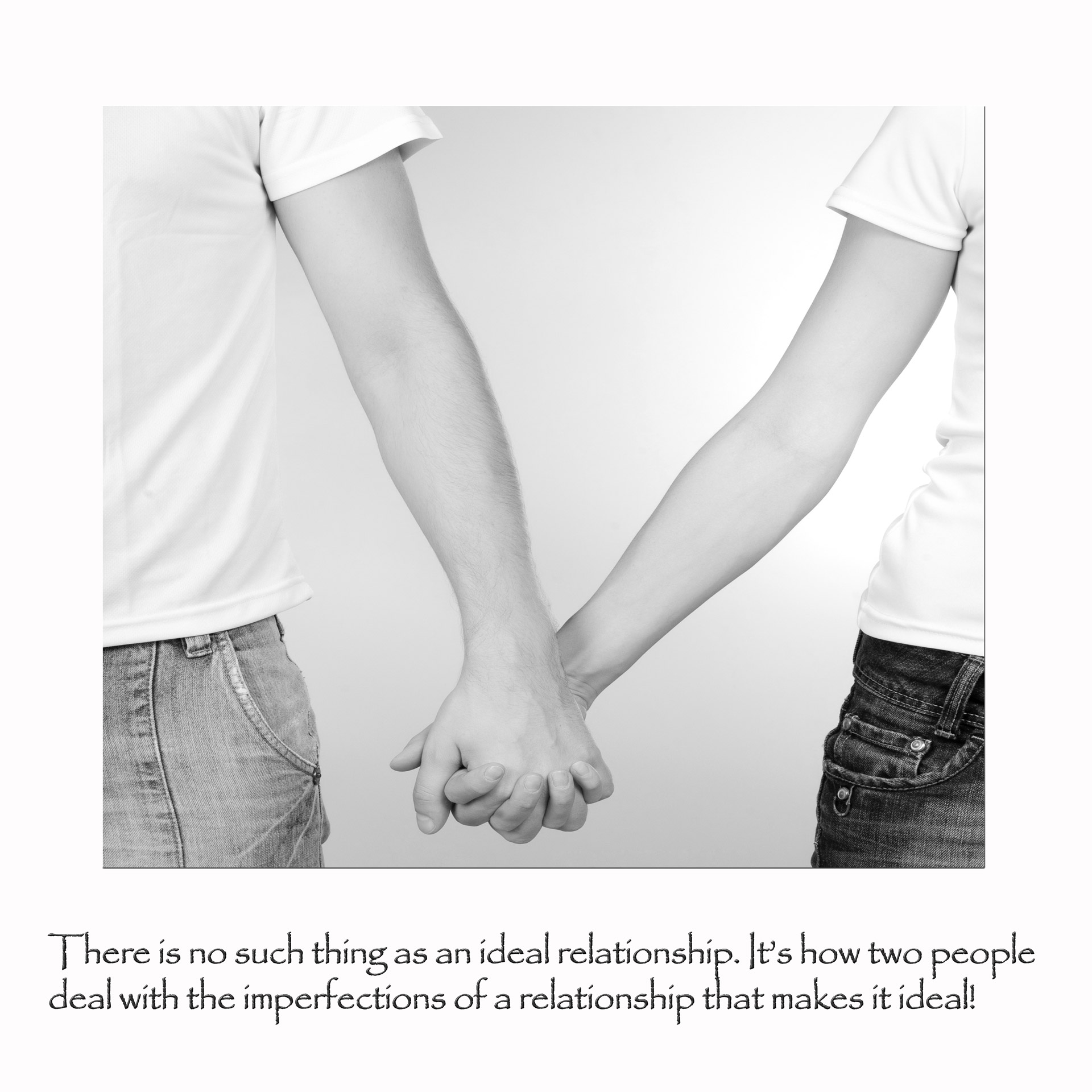
He even likens it to the old Groucho Marx joke, " I don't care to belong to any club that will have me as a member."
In the film, we watch as Alvy systematically sabotages his relationships only to then regret it after they're over.
But then something weird happened. I actually started to see this same pattern playing out with people I knew in my everyday life. Twice I witnessed one partner goading the other, speaking harshly almost like the desire was to reject, push away, or create cause for a break up.
And that got me thinking. Is this problem really pervasive? Because obviously it wasn't just a pretense in a movie. It was happening in real life, right in front of me.
If it is pervasive, then what's at the root of it? Why would someone intentionally sabotage a relationship?
The answer that came to me was deservability.
If we don't think we deserve love then we want to reject it.
I know this situation well. In college I was in a long term relationship with a man who I deeply loved. More importantly, he genuinely loved me. But I wasn't ready to receive that love. I didn't think I was worthy of it, that I deserved it. I was fat, directionless, semi-unmotivated, passive aggressive. Why, would a handsome, smart, ambitious guy like that really love me?
So you know the story. We broke up, went our separate ways, created lives, etc. It took me at least a decade to realize that he loved me at a level that I simply could not receive.
His capacity to love me was larger than my ability to accept it.
If you're reading this and thinking- I might be pushing away my partner because I don't think I deserve to be loved. Maybe it's time to change.
The question to ask then is: "Are you ready to receive love?"
Then it's time to claim it definitively. Yes, I deserve to be loved. As much as I love others, I deserve to be loved.
There's an affirmation Louise Hay shares where she compares being loved to breathing. She says:
"We do not have to earn the right to breathe. It is God given because we exist. So too is the right to love and be loved. The fact that we exist means that we are worth loving."
So, what do you think? Just because the club wants you is that a bad thing or could it be the opportunity you've been waiting for all this time?
Can you relate to this? Have you ever pushed love away?
Leave a comment with your story.
And join our online community.
It's free!

A Prisoner to Anger?
Recently I found myself irritated and annoyed by someone in my life. I was struggling with acceptance and found myself aggravated and put out. My mind was on a circular track, like a broken record stuck in a groove, repeating over and over again, allowing me to wallow in my negativity.
Recently I found myself irritated and annoyed by someone in my life. I was struggling with acceptance and found myself aggravated and put out. My mind was on a circular track, like a broken record stuck in a groove, repeating over and over again, allowing me to wallow in my negativity.

Later that day, I went to a discussion group. We read and talked about passages reminding me that I am not my mind. I am not even my thoughts! The conversation gave me objectivity and helped me break out of my negative pattern. I began to let it go. As I sat there contemplating my own process, I started to see how my anger and frustration were holding me prisoner in my mind. It had control over me because all I could think about and fixate on was feeling wronged. Then I thought, "do I really want to give this person that power over me?" Wow. Of course the answer was a resounding, "NO!"
Toward the end of the discussion, another member shared that he also was trapped in resentment. Those weren't his words, exactly. What he said was that he wasn't able to get passed a person who'd wronged him. It sounded like it had happened a long time ago.
Of course the first words that came to my mind were, "you have to forgive him, the person who wronged you." But the gentleman wasn't hearing this. I looked at him and could see that his anger had distorted his facial features. Listening, it became clear that he'd allowed the bitterness to even define him. Who was he if he wasn't betrayed?
This man was mirroring my own inner conflict. I saw in front of me how the anger we hold onto, really holds us. Just as I'd been locked in a prison cell all day with my obsessive thoughts, I could see this man was too. For him though, it had been years.
There is a quotation often attributed to the Buddha or Pema Chodrun but the origin is actually from Alcoholics Anonymous, "Anger is like drinking poison and expecting the other person to die."
What I felt inside myself on Monday and what I saw with this gentleman, was that quotation playing out exactly. We are the ones who feel the anger so ultimately it is punishing us. When we forgive, we set ouselves free. It's the irony of forgiveness. Our egos resist it so much, "we've been wronged! She's hurt us!" But the reality is that we are the ones who go on hurting ourselves over and over again by holding onto that pain. So I am resentful. How does she know? She has no idea. She doesn't feel my anger, only I do.
When we forgive, it doesn't mean that we forget or even deny that another person hurt us. It doesn't remove their responsibility, minimize or justify their actions. We can release the emotions without excusing the wrong. Forgiveness allows for an internal peace, helping us go on with life.
Sometimes when we've been holding anger for so long it can be hard to forgive. Louise Hay recommends that even if we're not ready to forgive we can be "willing to forgive." The Universe will support even our willingness and help us get there. Along with the mental health benefits of releasing resentment are the physical health benefits. As the Mayo Clinic reports, forgiveness allows for less anxiety and stress, lower blood pressure and reduced risk or alcohol or substance abuse.
So don't think about forgiveness as something we do for another person, think about it as a gift we give to ourselves. Be willing to walk over that proverbial bridge to the other side, the side of healing, love and empowerment. As Louise Hay says, "I forgive and I set MYSELF free."