

5 Ideas for Managing This Anxious World
Worried about the next snowstorm hitting your city or that your flight will be delayed? You’re not alone. In fact, every single one of us experiences anxiety. But when we constantly avoid socializing, excessively sweat before a presentation or are unable to sleep because our minds won’t stop, then anxiety may be taking us over.
According to the National Institute of Mental Health, 40 million Americans or 18% of our population is suffering from this level of anxiety making it the top mental illness diagnosis. Anxiety is clearly the malady of our modern day life.
What Exactly is Anxiety?
Anxiety, as I mentioned earlier, is a normal human response to uncertainty and we experience it often in our lives at work, in school (such as before tests), when we make decisions or if something unexpected arises.
Anxiety becomes a problem when our feelings and thoughts prevent action or cause symptoms that render us unable to cope. These include constant worry, panic, fear and apprehension. There can also be physical symptoms such as sweating, heart palpitations, high blood pressure, and restlessness.
Why Are We So Anxious?

Worried about the next snowstorm hitting your city or that your flight will be delayed? You’re not alone. In fact, every single one of us experiences anxiety. But when we constantly avoid socializing, excessively sweat before a presentation or are unable to sleep because our minds won’t stop, then anxiety may be taking us over.
According to the National Institute of Mental Health, 40 million Americans or 18% of our population is suffering from this level of anxiety making it the top mental illness diagnosis. Anxiety is clearly the malady of our modern day life.
What Exactly is Anxiety?
Anxiety, as I mentioned earlier, is a normal human response to uncertainty and we experience it often in our lives at work, in school (such as before tests), when we make decisions or if something unexpected arises.
Anxiety becomes a problem when our feelings and thoughts prevent action or cause symptoms that render us unable to cope. These include constant worry, panic, fear and apprehension. There can also be physical symptoms such as sweating, heart palpitations, high blood pressure, and restlessness.
Why Are We So Anxious?
Our modern world is exciting and fast. Thanks to technology we’re also hyper connected and constantly exposed to vast quantities of information. It’s simply too much to process.
In addition, anxiety is effortlessly fed by looming uncertainties like the slow economic recovery, rising terrorism, constant environmental stressors, and managing life’s increasingly complex responsibilities.
If we’re forward thinking, we easily become habituated toward worry, fear and anxiety. What’s going to happen? How am I going to manage it? What if I get Ebola?
To cope with anxiety, many people take Benzodiazepine medications such as: Xanax, Ativan, Valium or Klonopin. These pills target the gamma-aminobutyric acid or GABA, a neurotransmitter chemical, enabling the user to feel more relaxed, and less anxious. They can be addicting and often, when a pill wears off, can make a person feel even more anxious.
What Else Can We Do?
Here are 5 Easy Ways to Address Anxiety Without Medication
1. Manage It
The number one thing we can do to help ourselves deal with anxiety is to change our thinking.
Let’s reframe anxiety and accept that it exists, that we will feel it and experience it. Anxiety will never go away because we are hard wired to have it. Instead, we have to manage it and recognize it as a warning.
What Does Anxiety Want to Teach Me Right Now?
Do I need to make sure my car is filled with gasoline before the storm? Should I double check my alarm clock so I won’t be late for the meeting? Anxiety is a natural warning system but it doesn’t have to become a way of life.
2. Be Present
Often we fall into anxious thoughts because we’ve moved ourselves out of the present moment and into a future scenario. We imagine terrible suffering and awful possibilities. To quote Mark Twain, “.. life does not consist mainly -- or even largely -- of facts and happenings. It consists mainly of the storm of thoughts that is forever blowing through one's head.”
Instead, if we can bring our attention back to this moment, most of the time, nothing awful is happening. It’s all in our heads. When I find my mind careening forward and painting scary scenarios, I remind myself to come back to now, back to this present moment.
Then I ask questions like:
Am I safe right now?
Am I supported right now?
Are my children okay?
Am I healthy?
And nearly all the time, the answer is yes.
3. Foster Healthy Mind Habits
Left to its own devices, our minds wander, projecting lots of “what if” scenarios or telling us scary stories and other negative things like: “They don’t like me.” “I’ll lose my job.” ”He’s talking about me.” “They’ll never hire me.” “I won’t have enough money.”
Catching ourselves thinking like this is the first step.
Then we can begin to change those thoughts and shift into healthier patterns. Choosing positive self-talk, reassuring words and kind messages instead. Phrases like:
“I’m doing a good job.”
“I can ask for help if I need it.”
“I’m an excellent money manager.”
4. Limit News
We can also support ourselves by limiting our exposure to the news. Today we can see what is happening across the globe and sometimes that level of knowledge can feed our anxiety. Learning about a military coup or suicide bomber can fuel our fear and propel us into anxiety when, in all likelihood, that occurrence will have no real impact on our lives. Especially avoid watching the news before bed.
5. Exercise
The research that exercise reduces stress and anxiety is overwhelming. We all know it immediately makes us feel better, boosts our immune system and releases endorphins. And yet, when I’m in an anxious state, it can be hard to get myself motivated.
So the best strategies to ensure that exercise is part of your life are to:
Create a regular routine.
- Maybe it’s a walk with friends once a week or an evening yoga class. For me it’s running 4-5 times a week.
- Creating a routine can help us stay exercising even when anxiety appears.
- Maybe it’s a walk with friends once a week or an evening yoga class. For me it’s running 4-5 times a week.
Have a buddy.
Initially it was really hard for me to be self-motivated to exercise.
I relied on my husband to get me going. He loves working out and was like a cheerleader for me.
Another way to have accountability is to meet someone at the gym or studio. Knowing someone is waiting can get you there when you feel unmotivated.
So the next time you find yourself feeling anxious and stressed, try incorporating some or all of the above. If you need more help, reach out to a friend, coach or therapist. There’s no reason to feel oppressed by this life. It’s here for you to be lived and enjoyed to the fullest. So get out there, have fun and live anxiety free!
What do you do for anxiety?
Leave a comment below!
And get my blogs straight to your inbox today, FREE!

3 Reasons Why Lying Doesn’t Work in Relationships
I read an article over the weekend in which the author encouraged us to lie, especially to our loved ones. I had to re-read his words because I could not believe it. His premise was that in order to keep the peace, we lie to one another and not reveal our true thoughts.
One of his arguments was that we can’t always say exactly what we’re thinking.
At times we have to be mindful and discerning about how we speak to people.
This isn’t lying – it’s phrasing things so that another can more easily hear it. After all, none of us enjoy being criticized or put down. And those forms of communication are totally ineffective anyway. So instead of saying to my friend, “you don’t do anything anyway so why not.” I might re-phrase it to “you have the time since you don’t have a lot of commitments.”
Even after finishing the article I was far from convinced of the merits of lying. In fact, I think the opposite is true. In all relationships, and especially love ones, we need honesty.
Am I alone in thinking this?

I read an article over the weekend in which the author encouraged us to lie, especially to our loved ones. I had to re-read his words because I could not believe it. His premise was that in order to keep the peace, we lie to one another and not reveal our true thoughts.
One of his arguments was that we can’t always say exactly what we’re thinking.
At times we have to be mindful and discerning about how we speak to people.
This isn’t lying – it’s phrasing things so that another can more easily hear it. After all, none of us enjoy being criticized or put down. And those forms of communication are totally ineffective anyway. So instead of saying to my friend, “you don’t do anything anyway so why not.” I might re-phrase it to “you have the time since you don’t have a lot of commitments.”
Even after finishing the article I was far from convinced of the merits of lying. In fact, I think the opposite is true. In all relationships, and especially love ones, we need honesty.
Am I alone in thinking this?
Here’s why honesty matters
1. Trust
How do you have a relationship without trust? I need to trust that my lawyer or accountant is ethical, does things legally and has my best interests in mind. Likewise, I need to trust that my employees are truthful with me, don’t steal or reveal trade secrets.
As we need trust in our business relationships, we need it even more in our intimate ones.
I want to know that what you promise to do, what you say, you genuinely mean. Then I can count on you, physically and emotionally. I used to have a relationship in which I could not rely on my partner. He was never there for me. He would always say yes or be indecisive but then when the day rolled around, would be unavailable. Guess what happened?
2. When You’re Trustworthy, I Open Up More
We all crave intimacy. We all want to be known and understood. This only happens when we feel emotionally safe with another person. I allow myself to be vulnerable because I know my husband will support me. If I share a deep fear or angst with him, he doesn’t belittle me or make me wrong. Instead he listens deeply, and encourages me. This kind of sharing can only happen when we’re truthful. If instead of listening to me, my husband cracked a joke or placated me with a platitude, I would cease opening up to him. And eventually we would grow farther and farther apart.
3. A Genuine Sounding Board Not A Yes Man
Think about it. Do you have respect for people who always tell you what you want to hear? It may feel nice at first but isn’t it so much more refreshing when someone is honest? When they question your judgment or actions? We all need people in our lives who can be the voice of encouragement or concern – who take on either role. It gives us clarity and truthful feedback. This only comes with honesty, trust and rapport.
What works for you in your relationships? Do you find that you tell little lies often for fear of hurting someone’s feelings or because you don’t know how to be truthful? Or do you feel that your relationships are built on trust and honesty?
Tell me what works for you. I’m all ears.
Leave me a comment below.
Get my blog in your inbox! Sign up today - it's FREE!

What’s Motivating You?
How do I get motivated?
Motivation or why we do things is super interesting to me.
I’ve spent a lot of time and energy researching it because I’ve wanted to inspire and motivate – in the classroom, with my clients and with myself.
Recently I was watching Tony Robbins do a Ted Talk. In it, he identified 6 key factors that motivate human behavior.
They are: certainty, uncertainty (or variety), significance, love/connection, growth and contribution.
His 6 characteristics allow us to dig a little deeper into motivation and get into the why behind it.
It’s still January and not too late to start those resolutions. So…

How do I get motivated?
Motivation or why we do things is super interesting to me.
I’ve spent a lot of time and energy researching it because I’ve wanted to inspire and motivate – in the classroom, with my clients and with myself.
Recently I was watching Tony Robbins do a Ted Talk. In it, he identified 6 key factors that motivate human behavior.
They are: certainty, uncertainty (or variety), significance, love/connection, growth and contribution.
His 6 characteristics allow us to dig a little deeper into motivation and get into the why behind it.
If we can identify the why, we can better understand our needs, our thoughts, emotions and ultimately our behavior.
So, let’s walk through these.
Certainty
People who are motivated by certainty crave safety and security. They prefer routine and want life to be predictable and ordered. They’re uncomfortable with change or stretching out of their comfort zones. Is that you?
Uncertainty/Variety
Those who like uncertainty or variety need change, and stimulation. They are easily bored, crave new-ness, and adventure. If you are one of these people, it’s hard to sit at a desk all day doing the same thing. Perhaps these folks find work as tour operators, are self-employed or are entrepreneurs specializing in startups.
Significance
For those seeking significance, they strive to be accomplished, knowledgeable, and worthy of respect. Many people crave to feel important, or relevant and play it out in a myriad of ways. They become an expert in a field, enjoy being the life of the party or crave to be in charge – the boss.
Love/Connection
Love and connection satisfy the need for belonging. As humans, we all want to be loved and feel connected to others. If love and connection are your primary motivators, you seek out a partner, friendships, to be part of a community- at work, socially or perhaps in a church or temple setting.
Both growth and contribution are ways that we self-actualize.
Tony Robbins says that the previous four (certainty, uncertainty, significance and love/connection) are all on the level of personality. Where as these two, growth and contribution, are on the level of the soul.
Growth
Each of us craves growth. It's the natural order of life to grow, learn and evolve. If you’re primarily motivated by growth think of what you fill your life with – books, online courses, goal setting, seeking out teachers and mentors. Perhaps even travel.
Contribution
Lastly, contribution is the ultimate aspect of self-actualization. Stepping out of ourselves and helping others is the most rewarding endeavor. Taking care of another human being, fills us with happiness, peace and love. Recognizing that there is more to do than taking care of me helps me remember that, in truth, we are all one. I can help others and make the world a better place – for that person and for myself.
When we explore why we do things, why we make certain decisions, we can trace them back to our motivation. It’s as if our motivation is calling the shots – giving us the feelings and the words to take action.
Am I calling this person because I want to feel significant or am I doing it because I want to be connected? Maybe I’m trying to contribute?
Am I moving back in with my parents because I need to feel secure or is it so I can grow by going back to school?
When we uncover what those underlying motivations are, it can help us more easily accomplish our goals and objectives.
Sometimes we don’t want to do things and the best way to get unstuck is to understand what’s behind it, what’s motivating you.
So here’s an example. When I found myself at 22 living in Hong Kong, working at a job where I felt neither significant nor connected, but had a constant routine that made me feel like a slave to my desk, I realized I had to make a change. And the things that stood out to me at that time were:
1. Variety
I needed a job where I didn’t have to do the same thing all day long. I needed to move around and do different tasks.
2. Connection
There I was living in a foreign country and I knew next to nothing about Chinese culture and had hardly any friends. I yearned to feel plugged in.
3. Contribution
I wanted to make a difference. To have a job that could help others.
So, what happened?
I became a teacher and it met all of those requirements!
In delving in to our motivations, we can better understand ourselves and move in the directions that feel most fulfilling and rewarding to us. Give it a try!
What’s motivating you?
Let me know by leaving me a comment below.
Sign Up today!
Are Your Beliefs Holding You Back?
Since it’s the middle of January I’ve still got resolutions on my mind. Last week I wrote about turning those resolutions into goals and then taking action by identifying the: what, why, how and when. If you need help with that, download my FREE Goals and Action Step worksheets at :
But if you’ve already done that and are still struggling to get going, it may be time to dig a little deeper and uncover any negative beliefs that might be getting in your way.
What is a belief?
In the simplest definition, a belief is an idea or concept that we believe is true about ourselves, others or the world at large.

Since it’s the middle of January I’ve still got resolutions on my mind. Last week I wrote about turning those resolutions into goals and then taking action by identifying the: what, why, how and when. If you need help with that, download my FREE Goals and Action Step worksheets HERE
But if you’ve already done that and are still struggling to get going, it may be time to dig a little deeper and uncover any negative beliefs that might be getting in your way.
What is a belief?
Stated simply, a belief is an idea or concept that we believe is true about ourselves, others or the world at large.
The first time I heard that definition, I was at a weekend workshop about money and wealth lead by Harv Eker and a light bulb went on. I suddenly realized my beliefs weren’t set in stone. They were just ideas I had decided were true for me. Instantly I got that I was in control AND could change them! It was exciting, thrilling and aweing.
If you’re like I was before I attended that workshop, you probably haven’t spent a lot of time thinking about your beliefs. But here’s the thing, what we believe is dictating how we feel, what we think and how we show up in our lives.
So it’s time to dig in and figure yours out.
How are your beliefs hindering you?
Is the Universe benevolent or dangerous?
Do you deserve success?
Are you loveable?
Your answers to these 3 basic questions can help you identify some core beliefs that may be keeping you stuck.
For example, I used to think that the world was an unsafe place. This belief was developed over years, starting from when I was a young girl. My sister and I went to boarding school the year I turned 8 (and she 7). I had to take care of her. I was scared all the time. Every weekend we traveled from a small town in Connecticut to Manhattan. I constantly felt afraid and alone.
My belief that the world is an unsafe place arose as a response to what I was experiencing.
I decided that I had to be vigilant because no one would be there for me, that there was danger everywhere. These beliefs got solidified over the years every time I was unsupported or rejected.
Since I took that money workshop, I’ve come to see how this basic core belief has severely hindered my ability to trust, take risks, make deep connections, and instead propelled me to hide or check out using food, drugs or alcohol.
Changing Your Beliefs
So, I decided to shift my belief. I wanted to have hope and not fear, feel supported not threatened, be accepted not rejected.
I worked on this using self-reflection and awareness. When I noticed that my body felt anxious or my mind was tense or nervous, I calmed myself with breathing, meditation and positive self talk using affirmations such as: “I am safe in the Universe and all life loves and supports me.”
I also talked about what I was experiencing and feeling with a life coach. I wanted to understand where this belief came from and actively pull it out by its emotional roots. When that process was completed, I had to replace it with a new belief.
If you’re ready to dig in, start by answering those 3 Core Questions from above:
Is the Universe benevolent or dangerous?
Do you deserve success?
Are you loveable?
If you answered any of these in the negative, take a closer look.
Why is it that way?
What happened in your past that lead to this belief?
Are you ready to let those old stories about who you were go?
What can you tell yourself instead?
The process of delving into this might seem scary but it will change your life. The only thing limiting you is you and that starts with your beliefs. So jump in, have fun and reach out if you need any help!
Let me know how it goes by leaving me a comment below or sending me an email.
And if you haven't joined our online community, here's your chance.
Sign Up Today, it's Free!
Nail Your New Year’s Resolutions In 4 Easy Steps
On some level, I think all of us dread one thing about the New Year… resolutions. What we think is lofty or even good for us can soon feel obligatory and for some, even oppressive.
This is why I’ve taken a new attitude on the resolution. We all know that it’s easy after a few glasses of champagne on December 31st to make loads of promises we may or may not keep, right?
So here’s my idea: Turn those resolutions into goals and create some action steps using this
4-Step Process.

On some level, I think all of us dread one thing about the New Year… resolutions. What we think are lofty or even good for us can soon feel obligatory and for some, even oppressive.
This is why I’ve taken a new attitude on the resolution. We all know that after a few glasses of champagne on December 31st, it’s easy to make loads of promises we may or may not keep, right? So here’s my idea:
Turn those resolutions into goals and create action steps using this 4-Step Process.
Step 1. Choose a few resolutions/goals that you really want.
I’ll use an example that many Americans decided on New Year’s Eve - to lose weight.
The first thing I’m going to do, though, is qualify it. What does lose weight mean to me? Do I want to lose 10 pounds or 100 pounds?
Look at your resolution. If it’s too general, make it more specific. I’m going to turn – to lose weight – into:
My Resolution/Goal is: To lose 20 pounds
Step 2. Why did you choose this resolution/goal? Examine your motivation, reason or rationale.
For Step 2, I need to decide on my why. Why weight? Why 20 pounds?
Ask yourself why you want to make this change in your life. The truth is that if we don’t have a good reason, we aren’t going to do it. So dig in, find out what your motivation is!
My answer is because I feel unhealthy.
I can’t fit into my clothes and I’m tired all the time.
I want to both feel good and look good!
Step 3. Implementation – Now that you’re clear about the what (resolution/goal) and the why, the next piece to answer is the how.
a. How are you going to achieve this goal?
b. What specific actions will you take?
c. Do you need to enlist anyone’s help?
Step 3 is critical because this is what needs to occur in order for you to get results. These are the actual steps you will want to take in order to achieve the goal. So in my example, I have to figure out what I’m going to do to really lose 20 pounds. Here are some of my ideas:
Stop drinking sugar drinks (like soda)
Cut out junk food – no fast food, chips or donuts
Walk after dinner with my partner (here I’m enlisting help)
Drink more water
Step 4. Create a timeline – Chunk out your action steps and put dates to them.
The last step is putting it all in motion because it won’t get done if we don’t plan and make time for it, right? Think about your entire year and the benchmarks you want to see over that time. It can be monthly or quarterly. Then think about each and every week, every day and what’s going to happen.
For my resolution, I have a year to lose 20 pounds and I want to do it slowly so I will keep it off.
For Step 4, I have to put my ideas from Step 3 into a timeline.
Weekly:
Starting today, I will stop drinking soda but allow myself one a week.
I will pack lunch instead of buying it except on Fridays when I'll treat myself to lunch out (but not fast food)
Walk after dinner at least 3 times a week – on Mondays, Wednesdays and Thursdays
Everyday, I will drink 8 glasses of water
This week I will buy a water bottle I love and carry it everywhere
Over the Year (Quarterly):
By March 1, I will have lost 5 pounds or I'll start walking 5 times a week
By June 1, I will have lost 10 pounds or I'll stop drinking soda altogether
By September 1, I will have lost 15 pounds or I'll pack my lunch everyday
After school or work today, sit down with those resolutions. Choose the ones that really matter and then walk them through this 4-Step process. What can you start doing this week to make your life better? Change is doable but we need a plan and a timeline. Once you design action steps that work for you, you’ll be amazed at the results! So, grab a paper and pen or sit down in front of your iPad and have fun!
Let me know how it goes. Leave me a comment below.
And join our growing community! It's free.
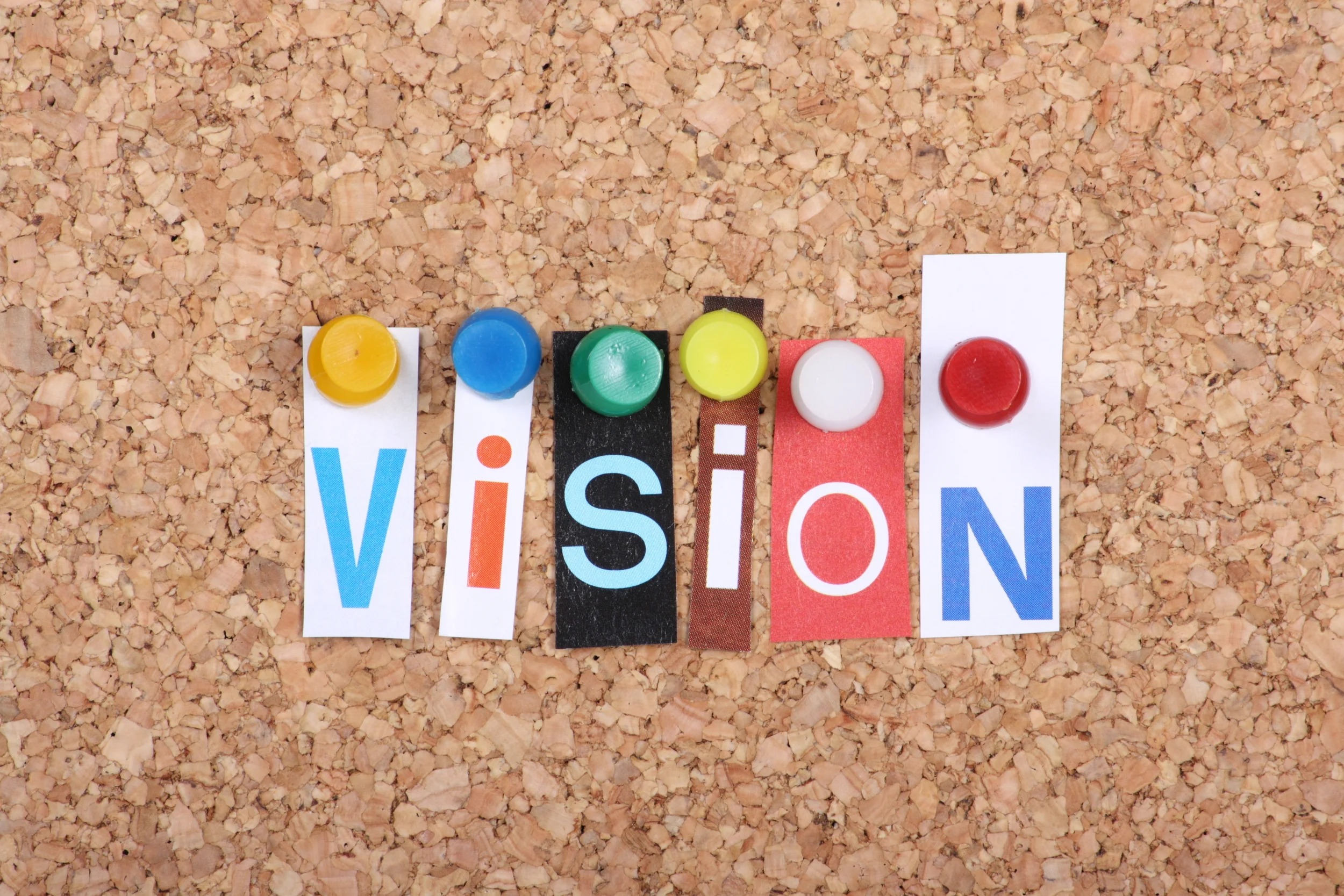
Time to Manifest! Make A 2015 Vision Board
For the past several years, our family has had a New Year’s tradition. We decided to make our own, because- here's my confession- I always hated New Year’s Eve. From the time I was a teenager, my sister and I would look at each other mystified. All everyone seemed to do was get drunk and then watch a stupid ball drop. What was the big deal?
So a few years ago, we modified our evening to make it work for us. As a family, we enjoy a celebratory meal, something special, because it is a holiday after all. We even have a bottle of champagne or Prosecco along with sparkling apple cider, (known in our house as kids champagne.) After our leisurely meal, we all gather in the living room and get to work making… vision boards.
For the past several years, our family has had a New Year’s tradition. We decided to make our own because -here's my confession- I always hated New Year’s Eve. From the time I was a teenager, my sister and I would look at each other mystified. All everyone seemed to do was get drunk and then watch a stupid ball drop. What was the big deal?
So a few years ago, we modified our evening to make it work for us. As a family, we enjoy a celebratory meal, something special, because it is a holiday after all. We even have a bottle of champagne or Prosecco along with sparkling apple cider, (known in our house as kids champagne.) After our leisurely meal, we all gather in the living room and get to work making… vision boards.
What is a Vision Board?
It is a pictorial representation of your year, what you would like to manifest or be inspired by in the upcoming year.
We buy poster board, and canvas panels, glue, sparkly markers, have lots of magazines and scissors and start cutting out images, words, and phrases that speak to each of us.
Often before I start, I spend some time making a list of goals and intentions I’d like to manifest for my year. I think about every aspect of my life from my career, to my health, finances, family, spirituality and, importantly, fun!
Then I tease out each idea. For example, if I want to be more successful in my career, I try to specify what that means. I qualify it by stating a certain amount of money or a specific number of transactions, appointments, sales or closings.
With these clear ideas in mind, I get to work digging for words, and pictures that will best remind and inspire me. Maybe for my above goal, I’ll put the phrase “cash in the bank” as a reminder or find a photo of someone shaking another person’s hand to represent a sale. Perhaps I really want to see humpback whales this year on vacation, so I’ll look for a picture of them to add to my board.
Other than that, the look, design and outcome are all up to you and your creativity!
It’s an opportunity to both have fun with your family and work toward manifesting your dreams in 2015.
If you’re in Vero Beach, join us on Saturday, January 3rd as we’ll be making vision boards together! Click here for more information. Otherwise, here’s what you’ll need:
Supplies for Vision Boards:
Poster Board or Canvas Panels (These are canvas-coated cardboard and can be found at Michael’s)
Rubber Cement – This is the best glue even though it’s smelly, because it dries flat
Magazines - A wide variety is best
Photographs – Take some time before New Year’s Eve to print any photos you’ll want to add
Scissors – One for each person is ideal
Anything Else Fun – Markers, stickers, glitter, ribbon, stencil lettering, craft paper...
This is a great activity with people of all ages. Kids especially enjoy it and are incredibly creative.
When you’re done, post your boards below so I can see them!
Happy 2015!
And if you aren't part of our community, sign up today!

What’s Your One Word for 2015?
Last year, right after 2014 had just begun, I was listening to Dr. Robert Holden on Hay House radio. He shared an idea he’d been doing for awhile of choosing one word for his new year. Then he would meditate on it, delve into it, and explore it for the next 365 days.
Inspired, I decided to do the same, choose one word for the year.
My word for 2014 has been trust.
Over the past twelve months, I’ve allowed myself to simply be with this word and see what happens. At one point, around March, I had a serious crisis with trust. I became super afraid of the future, and about what might happen. That experience invited me to go deeper with trust and prompted me to create a visual representation to both remind and inspire me to open up more to trust.

Last year, right after 2014 had just begun, I was listening to Dr. Robert Holden on Hay House radio. He shared an idea he’d been doing for awhile of choosing one word for his new year. Then he would meditate on it, delve into it, and explore it for the next 365 days.
Inspired, I decided to do the same, choose one word for the year.
My word for 2014 has been trust.
Over the past twelve months, I’ve allowed myself to simply be with this word and see what happens. At one point, around March, I had a serious crisis with trust. I became super afraid of the future, and about what might happen. That experience invited me to go deeper with trust and prompted me to create a visual representation to both remind and inspire me to open up more to trust.
As part of my pictorial representation, I have a few quotes from Rumi. Here’s one of them: Knock, and He’ll open the door.
Vanish, and He’ll make you shine like the sun.
Fall, and He’ll raise you to the heavens.
Become nothing and He’ll turn you into everything.
When I see this, it helps remind me to let go and… trust.
2014 is coming to a close and as I reflect on my relationship with trust, I am pleasantly surprised to realize that I’ve embraced trust at a deeper level than ever AND am experiencing it in a new way.
In fact, I don’t even think about trust (or lack of it) in the same way. The constant uncertainty or questioning I always had before has slowly fallen away. Now trust is a given, it just exists. It’s my divine right. I know the outcome is assured and I trust that my life will unfold in the right and perfect way.
But over the past 12 months that wasn’t always the case. I’ve felt insecure and scared, uncertain and fearful.
To me, trusting in life is trusting in the unknown. Often when I have those hiccups of faith, those moments of anxiety or lack in trust, they occur right before some kind of transition or change. Maybe it’s me moving into doing something new, taking a risk or challenging myself. Each time, it’s like I have to jump into the void. I see myself standing on a cliff having to leap off into the unknown. So of course my visual representation depicts a cliff with the word trust spanning it.
Over a decade ago, I had an astrologer tell me that I was so taken care of, I could relax back into the hammock of God’s love, that this energetic web would completely support me no matter what. Of course at the time, there was NO WAY I was doing that-- relaxing, trusting. The world was too unsafe and uncertain.
I couldn’t trust any living person, how could I trust something I couldn’t even see?
Yet it was almost like my astrologer planted a seed, a reminder of what was there for me. Over the years, I’ve allowed myself to try it out, to lie back into that energetic hammock and feel supported.
Fifteen or so years later, I’m capable of doing this more and more, especially after this year, my year of exploring trust. And you guessed it. I can look at my picture of trust, hanging over my desk, and see the golden hammock.
Today I do feel that trust. I know that I am being held and supported, that only good lies before me, that I am loved and guided. My only job is to show up, be present and loving.
Now I have to choose a word for 2015.
I have so enjoyed my exploration into trust. It has opened up a new way of being for me and I can honestly say that trust is a permanent part of me. I carry it with me always, like I own it.
Since I more fully understand the power of choosing a word and its significance in my life, I have to find THE word for 2015. Simultaneously, I know I don’t really have to go in search of it, because just as trust showed up loud and clear as my word for 2014, I know the right and perfect word will appear any day now.
This new word will invite me to contemplate it for the upcoming year with thoughtfulness, intention and insight. And I’m looking forward to it!
Do you know what your word for 2015 is?
If so, share it with me! If not, sit with this idea and ask, “What’s my word for 2015?” Invite your word to come to you. How will you then spend your year exploring and delving into it?
Let me know, I'm all ears! Leave me a note below.
And sign up today for our news and blogs, FREE!
The ONE Question to Ask when Starting or Changing Careers
I studied Art History in college. It was January of my sophomore year and I had to choose a major. Up to that point, I hadn’t really liked or more accurately, felt genuinely interested in anything. There’d been the sociology and psychology lectures, the African history symposium, French, Classic literature and a number of political science classes. But nothing had really sparked my curiosity until I’d signed up for a class on Cubism the previous semester. It was a small group, maybe ten or twelve students sitting around a large table. We delved into the roots of Cubism, the birth of modern art, looking through a historical lens, a painting lens and discovering how the writers, thinkers and visual artists all influenced one another. I was rapt. I felt alive. This was fascinating.
But soon a new anxiety arose, what was I going to do with an Art History major?

I studied Art History in college. It was January of my sophomore year and I had to choose a major. Up to that point, I hadn’t really liked or more accurately, felt genuinely interested in anything. There’d been the sociology and psychology lectures, the African history symposium, French, Classic literature and a number of political science classes.
Nothing had really sparked my curiosity until I’d signed up for a class on Cubism the previous semester.
It was a small group, maybe ten or twelve students sitting around a large table. We delved into the roots of Cubism, the birth of modern art, looking through a historical lens, a painting lens and discovering how the writers, thinkers and visual artists all influenced one another. I was rapt. I felt alive. This was fascinating.
But soon a new anxiety arose. What was I going to do with an Art History major?
Over the next two years, I threw myself into art and even lived in Florence, Italy for six months, visiting many of the buildings, paintings and sculptures I’d only viewed as slides. But in the back of my head was this nagging feeling.
Something was amiss.
As I paid more attention to that voice, I realized that I felt distinctly torn. On the one hand, I loved art. I loved how it represented humanity, our struggles and our history. I loved how it reflected society or asked us to think more deeply about our beliefs and assumptions.
On the other hand, I felt compelled to be useful, to do something “needed.”
Art is needed but in my 20 year-old mind, it felt like a secondary need and I was being drawn to fill a primary one, like protecting the environment, working for Oxfam or at a homeless shelter.
Even after all that internal strife, I was nowhere near choosing a job when I was close to graduating from college. I dreaded the “What are your career plans? What do you want to do (for the rest of your life)?” questions and purposefully avoided my parents’ friends and anyone I thought might ask me those.
Just thinking about graduating and having to answer them stressed me out.
I honestly had no idea. I didn’t really know what I loved, was passionate about or even liked. I did like art but my interest in it had begun to wane. All I knew was that I felt the need to be helpful. I’d read that quotation about being part of the solution and I wanted to be that but didn’t know what form it would take.
Life kept moving and I stumbled along, eventually finding my way. It took about two years of trying different jobs but I did end up being useful – I became a teacher.
Turned out, I really liked it.
When people asked me how that happened, how I chose teaching, I’d often say that I fell into it. Because back in college if you’d predicted my future and told me I was going to be a teacher, I would have laughed in your face and adamantly denied it. I hated public speaking and teaching definitely wasn’t cool.
Since beginning teaching over two decades ago, I’ve also worked as an educational consultant, a public relations writer, founded a school (and done the thousands of jobs associated with that) and more recently, become a writer, life coach and psychotherapist.
I wish that, back when I was 20, I’d known to reframe the stressful career question.
The daunting, overwhelming question, “What do you want to do (for the rest of your life)?”
The reframe not only makes it do-able to answer, it’s also a lot more accurate especially in today’s world.
Because here’s the truth. That question: “What do you want to do (for the rest of your life)?” is no longer applicable. Just as college students overwhelmingly change majors, most of us will have multiple jobs too. I certainly have. So, the revised question to ask is this:
What do you want to do for the next THREE years?
Doesn’t that feel so much better? Isn’t it more manageable and actually kind of exhilarating?
If you find yourself in this predicament because your impending graduation is hanging like a black cloud over you or you’re simply ready for a new opportunity, a change from your existing job, ask yourself this question. Allow yourself to really delve into it.
What would be exciting to do for the next three years?
What is your heart yearning for?
What skills would be thrilling to acquire?
Where do you feel life is leading you?
Tap into that internal knowing and unlock the answer. Then, let me know what is says!
Leave me a comment below.
And join our growing community!
Living Regret Free? Here's How
When I was 28, I moved back to the United States after living in Asia for over 6 years. I came with my toddler and my new husband, and that was about it. Money was tight.
That summer while living on the west coast, I’d planned on visiting my family in New York but had put off the trip until December when I was sure life would be more financially secure.
My Nana turned 91 that August and I wanted to see her again as well as enable her to hold her great granddaughter whom she’d met a year earlier.
But I never got the chance.

When I was 28, I moved back to the United States after living in Asia for over 6 years. I came with my toddler and my new husband, and that was about it. Money was tight.
That summer while living on the west coast, I’d planned on visiting my family in New York but had put off the trip until December when I was sure life would be more financially secure.
My Nana turned 91 that August and I wanted to see her again as well as enable her to hold her great granddaughter whom she’d met a year earlier.
But I never got the chance.
In October my father called to tell me that Nana had gone into the hospital, complaining of shortness of breath and had passed away peacefully. I was in shock. My Nana, gone?
I’d lost a friend of mine recently. She’d had a brain aneurism and died instantly. Linda’s death was so sudden and seemingly random. And I’d struggled to put it together but Nana. Nana had been there my entire life. She’d been the sun in my gloomy life with her consummate smile and cheerful disposition. Now she was gone.
And then I felt it, regret.
If only I’d gone to see her in July. If only I’d seen her one last time. If only I’d told her how much I loved her.
Okay, I knew she was old. But somehow it never dawned on me that I wouldn’t see her again, that she wouldn’t be there for me. Nana had always been my constant. She’d visited my sister and me, every week when I was growing up. Regardless of where we’d lived, she’d shown up with laughter, food and hugs. That was Nana, loving and feeding us, always.
I felt awful. Not so much because she was gone, because I knew that was an inevitability. And I also knew she wasn’t really gone, because she wasn’t a body. I felt awful because I hadn’t said goodbye.
That’s when I decided that I would do my best to live my life with no regrets.
And all these years later I still do.
It works like this:
When I’m about to make a decision, I ask myself this question. “If you don’t do this will you regret it?"
The answer helps shape my actions.
Here’s an example. Not long ago I went back to school to get a Master’s Degree in Social Work. After I was done, I was pretty burned out. Working full time, having an internship and going to class every week for nearly two years was exhausting. It would have been really easy to be satisfied with that and not have pursued getting licensed. Being licensed was another 2-year commitment, more classes AND a rigorous exam.
The thought gnawed at me that I needed to get licensed but I just didn’t want to do the work. This went on for a few months and then I asked myself the question.
“Will you regret it if you don’t get licensed?”
And my answer was, “yes.”
So I sucked it up, jumped through the hoops of completing the paperwork, finding a supervisor, and started.
I use my regret question with big issues like that one but also with small ones too.
It’s a way to keep me moving through even some of the small tasks that I “don’t feel like doing” because they might be uncomfortable or if I’m in a situation that might never come around again.
Like if I go to South Beach and they’re offering para-sailing and I don’t go because it costs too much. I’ll use my question to confirm my decision. Because I don’t want to get home only to discover that I really wish I’d gone.
My regret question is especially prescient when a decision is related to a loved one.
Over the years I’ve come to realize the importance of communicating how much I love and cherish those around me and I want them to know it.
Let’s say I have a disagreement with my husband. I can hold on to that grievance and brood or I can elect to talk about it with him and process it. Why? Because I don’t want any unsaid words to cause regret.
I want him to always know how much I love and care about him.
After all, life is fleeting and we don’t ever really know how long we’re here. We can pretend that it’s “if we die” but the reality is it’s “when.” Being cognizant of that helps me live more authentically and clearly. Because my goal is to come to the end of my life and to honestly be able to say to myself that I have no regrets.
How about you? Would this work in your life?
Leave me a comment below!
And join our growing community, its' FREE!

I Used to Binge, Now I Don’t. Here’s What I Learned.
From my earliest memories food was always there. I see my nana serving meatballs, me polishing off an entire plate of food and getting fifty cents, walking to the new Haagen-Dazs for a vanilla cone. Food was there when people weren’t. Food was there when we had to move again. Food was there and eventually it began to keep love out.
I used to be the kind of person who lived to eat.

From my earliest memories food was always there. I see my nana serving meatballs, me polishing off an entire plate of food and getting fifty cents, walking to the new Haagen-Dazs for a vanilla cone.
Food was there when people weren’t. Food was there when we had to move again. Food was there and eventually it began to keep love out.
I used to be the kind of person who lived to eat.
I couldn’t wait to get home from school to make myself a bowl full of brownie mix and eat it, raw. As I kept gaining weight, my bingeing became secretive. I’d tiptoe into the kitchen, quietly open the cupboard, take a handful of cookies, and then run upstairs to my room.
But everything got much worse when I went away to boarding school.
In that accelerated academic environment, I experienced a new level of stress. It was the first time in my life that I wasn’t good at something, that I wasn’t a star. So I ate.
At times I couldn’t shove enough food into my mouth and often raided the vending machines in my dorm, buying candy bars and cookies, devouring packet after packet.
Bingeing haunted me throughout high school, college and into young adulthood.
Initially, food was comforting and provided relief but ultimately, after eating too much, I’d feel physically ill and then emotionally berate myself. I’d begin a diet and exercise program, succeed for a while, and then something would swing me invariably to the other side and I’d binge, undoing weeks of hard work.
Graduating from college, I was a good 50 pounds overweight when I wandered into a bookstore in Cambridge one day. There I discovered what cracked open for me the mystery around my eating disorder, Geneen Roth’s book, When Food is Love.
It awakened a desire to delve deeper and I began re-thinking my relationship with food.
Reading it, I suddenly saw that I’d been using food as a substitute for love. “Food was our love; eating was our way of being loved. Food was available when our parents weren’t… Food didn’t say no. Food didn’t hit. Food didn’t get drunk. Food was always there. Food tasted good… Food became the closest thing we knew of love.”
Roth’s philosophy is that when we deny ourselves, we want even more. That rebound is fierce and just takes over.
So I stopped dieting and began to follow her plan.
Eating whatever I wanted was a dream. I spent hours concocting recipes. Eating only when I was hungry and stopping when I was full was much harder.
That required me to feel my body which meant I actually had to be in my body.
I’d spent so many years hating it, why would I want to be in my body now? It was the enemy- ugly and fat. I was ashamed of it. Yet I knew this was part of my healing. I had to be willing to be present in my body and not emotionally run away.
Over time, I have come to see that this is the only way to heal, by being fully present.
It felt great to “listen to my body” but the problem was that I couldn’t sustain it. Sometimes, I’d be triggered by stress, fear, anger, upset, annoyance, anxiety, you name it, and I would binge. That was when I realized I had to go deeper. I had to go into some of the emotional triggers that were causing my desire to eat and begin to change myself from the inside out.
To completely release food and go from living to eat to eating to live, took me three years.
Three years of uncovering my triggers and beginning to love myself.
Here’s what I learned:
1. Food isn’t the problem. It’s the symptom.
The problem was that I felt like there was a giant hole inside of me that needed to be filled. I had to learn how to fill that hole with love- and that started with ME, with self-love.
2. Control
When I ate, I felt out of control, like life was unmanageable, too scary and I couldn’t deal with any if it. Food was like the anchor. When I dieted, then I was controlling food and obsessing over it. Either way, it was about control or the need to be in control. It was only in the act of letting food go, surrendering it, that I could be free.
3. Being Present
I used food to run away from my here and now and to numb myself to negative emotion. When I allowed myself to be present, I had to feel everything. And to my surprise, it didn’t destroy me. Instead, it enabled me to heal.
Food was my primary drug of choice.
But I think anyone who has struggled with addiction can relate. After all, the truth is that we eat or drink or drug because we feel inadequate, unworthy and unlovable. When we’re willing to look underneath the surface, we can discover the truth of who we are and the real healing can begin. It might not be easy but if I could do it, anyone can. All you need is the willingness, the desire to change your life. And I promise, you’re worth it.
Can You Relate?
Share with me below!
And sign up today -
Be a part of our growing community.
Feeling Afraid? Try Acknowledging It
When I was in my early 20s, I was offered a job in sales and design for a manufacturer in Hong Kong. My office was in a factory located in an industrialized and severely polluted part of the territories. After arriving and settling in, I quickly realized that it wasn’t the job for me. They hardly had anything for me to do and had hired me primarily as a favor to my mother. Every day I sat at my desk in a windowless room pretending to work. It was pretty awful.

When I was in my early 20s, I was offered a job in sales and design for a manufacturer in Hong Kong. My office was in a factory located in an industrialized and severely polluted part of the territories. After arriving and settling in, I quickly realized that it wasn’t the job for me.
They hardly had anything for me to do and had hired me primarily as a favor to my mother. Every day I sat at my desk in a windowless room pretending to work. It was pretty awful.
About six months later I mustered up the courage to quit.
I made a list of what I felt like I needed in my life. Things like: sunshine, variety, more than 2 weeks vacation, connection. Between my list and my language limitations -not speaking Cantonese- I decided I should become a teacher. In fact, it met all of my requirements!
And of course that’s what happened.
I was offered a position at an international high school. I was thrilled, my first real job. I excitedly began prepping for my English literature and language classes until the night before school officially began. That’s when it dawned on me.
My job was public speaking all day, every day and I panicked.
As a child, I'd loved performing but that had all changed in high school. I had a crisis in confidence resulting from being socially ostracized. Now I was shy and scared, and most importantly, had lost my voice.
I quickly ran out of my apartment and down to the lobby then took off walking. My building was located on a cliff overlooking the harbor and was dark and quiet. As I walked, my mind whirred.
“What am I going to do? I can’t believe this. How could I have been so stupid? I can’t public speak all day everyday.” That freaked out voice went on and on until another voice interjected.
This new voice said to me, “It’s just fear. Can you do it anyway?”
Recently I’d read William Faulkner’s acceptance speech. The one he had given upon receiving the Nobel Prize for Literature in 1950. He’d spoken about the pervasive fear in the United States caused by the Cold War and the impending doom of nuclear annihilation that hovered over us. He went on to say: “[the young writer] must teach himself that the basest of all things is to be afraid; and, teaching himself that, forget it forever…”
Huh. I began to reason with myself. Fear is just an emotion. Was I going to let it stop me from teaching? Could I go through with it anyway, even though I was scared?
And the answer was, “yes, I can” and that’s exactly what I did.
In that moment, I realized that I was bigger than my fear. I had allowed myself to recognize it, and then put it aside.
Shortly after this, I saw a film that reconfirmed what I had experienced. In the movie, one of the characters quotes a Spanish proverb.
Translated it was: “A life lived in fear is a life half lived.”
Sitting in that movie theatre, I resolved that I would not live a half-life. I wanted to live a full, rich, complete life; truly experience being alive. And if that meant learning how to deal with fear, then that’s what I was going to do.
That was more than two decades ago but I still feel the same way today. Of course, fear keeps knocking and every time, I have to pay attention.
And in that time here’s what I‘ve learned:
Just because I experience fear, it doesn’t mean it has to control me.
If I acknowledge it, then I can manage it. When I try to push fear away or drown it by eating too much, drinking or avoiding, it comes back even stronger. Instead, when I recognize the fear and face it, just like I did on that dark cliff in Hong Kong, then I can disable it. I relegate it to the back seat instead of allowing it to be the driver. This way fear becomes my fellow traveler and not my boss.
What have you found helpful in managing fear?
Leave a comment below!
And sign up to receive more news from Shakti!
Finding Peace Amidst Crazy
It’s really easy to get sucked into busy. I watch people race around corners, speed talk into their phones, order lunch while texting. And I confess, I’ve been addicted to busy too.
Not long ago I was a single mom of two, and then started a business. If that wasn’t enough, a few years after that I went back to school and then… Yes, the list continues but not for long because soon I’d blown my adrenals; too much stress.
Guess what that felt like? Like having a constant panic attack. Instead of feeling no energy, I felt even more anxious, stressed out and crazed. Fortunately, I had a health practitioner who diagnosed it and I didn’t end up on anti-anxiety medication, just adrenal supplements. Almost immediately I felt calmer.
It’s really easy to get sucked into busy. I watch people race around corners, speed talk into their phones, order lunch while texting.
And I confess, I’ve been addicted to busy too.

Not long ago I was a single mom of two, and then started a business. If that wasn’t enough, a few years after that I went back to school and then… Yes, the list continues but not for long because soon I’d blown my adrenals; too much stress.
Guess what that felt like?
Like having a constant panic attack.
Instead of feeling no energy, I felt even more anxious, stressed out and crazed. Fortunately, I had a health practitioner who diagnosed it and I didn’t end up on anti-anxiety medication, just adrenal supplements. Almost immediately I felt calmer.
But here’s the thing.
A pill helped me feel better BUT I had to change my lifestyle AND confess that I was addicted to busy.
Busy is very alluring. After all, busy made me feel important. I had calls to make, appointments to attend, people waiting for me, more emails in my inbox than I could read. I mattered. I had value. I was doing, doing, doing until I dropped.
So now what? How to manage busy with balance?
Well, balance is a word that didn’t feel like it fit at all in my modern world. But when I started inserting small acts of self-care, rest and pleasure, it was easier for me to begin to release busy.
If you’re willing to try and alleviate busy, just a little bit, here are some easy ideas to slot right in:
1. Heading to Work? Try Breathing.
- Turn off the radio, close that magazine or newspaper and breathe.
- Do it for 5 minutes and count your breaths. Inhale ONE, exhale TWO until you get to ELEVEN. Then start over.
- Ignore the people staring at you or driving by.
- Focus on your breath. If you lose count, start over.
This will clear your mind and allow you to feel more focused when you get to work.
2. Stop at Lunchtime. Take 20 minutes -Go Sit Outside, Preferably by Water.
- Eat an apple or a yogurt (something satisfying but healthy-ish).
- Don’t look at your phone. In fact, don’t even bring it.
- Just listen to the water, look at it and stop.
If you do this, you’ll be amazed at its ability to recharge you.
The afternoon will be more productive, feel less stressed and fly by.
3. Fun. When’s the last time you had fun? What does fun even mean to you?
- Throw a Frisbee in your back yard or a nearby park with a spouse, friend or child.
- Dance around the living room to your favorite upbeat song.
- Play a board game like Clue, Pictionary or Twister instead of a computer one.
4. On Your Way Home? Instead of listening to the news or going through the home To Do List or menu planning -
- Put on some uplifting music. Something that will kick you into happy.
- How about Beethoven’s 9th Symphony and soar with Ode to Joy?
- If classical music isn’t your thing, try some banjo picking blue grass or choral South African rhythms.
- Find something that will instantly put a smile on your face and make your heart sing.
When you get home, you’ll feel clear and ready for the next task.
5. One Minute Mantra – Do this ANYTIME.
- Try it first thing when you wake up or at any point throughout the day.
- Pick an affirmation that will calm you down.
- It could be “I am safe” Or “I easily and effortlessly get everything done.”
- Maybe it’s “Creativity flows through me” or I am surrounded by love.”
- Take one of these or find a saying that feels good to you.
- When your mind starts with “I can’t….” or “I have too much to do…” and you feel the anxiety rising, embrace your statement.
- Just repeat it over and over. Instantly the anxiety should lessen.
Let me know how it goes and if busy feels suddenly less so.
Leave me a comment telling me which of these 5 YOU liked the best!
And sign up to stay in the know.

A Life Lesson from my 14-Year Old
Last week my 14-year old was being just that, a 14-year old. When I’d ask a question, I’d get a grunt or if I was lucky a one word answer. I knew in my heart that it wasn’t about me but as the days wore on and the behavior stayed the same I watched my tolerance expire.
Finally, I just couldn’t take it anymore.

Last week my 14-year old was being just that, a 14-year old. When I’d ask a question, I’d get a grunt or if I was lucky a one word answer. I knew in my heart that it wasn’t about me but as the days wore on and the behavior stayed the same I watched my tolerance expire.
Finally, I just couldn’t take it anymore.
Fortunately, I didn’t lose it in front of her, yell or express my frustration. Instead, I called a friend. “I need help. My daughter won’t talk to me and I’ve reached the end. I don’t think I can take another day of this.”
In our conversation, what ended up emerging wasn’t my daughter’s behavior but rather my response to her behavior. After all, I want to show up and be loving, supportive, kind, empathetic. Don’t you?
Instead I felt frustrated, irritated and annoyed. And that made me feel embarrassed.
What I wanted was to be able to keep riding it, let it wash over me like a wave, knowing that it was just temporary. I wanted to allow her the freedom to be where she was and how she was without being affected by it. But sometimes, in the moment, that’s hard to realize and easy to fall into defeat.
So why did my response bother me?
Underneath my disappointment about not showing up as a loving presence, was the fear that I was being a bad parent AND that behavior would have lasting effects.
Here’s how the unconscious thought went, “because I’m being a bad parent, I’ll never have a good, loving relationship with her.”
Talk about projection! Wow.
Once I got clear about my underlying fear and could satisfactorily let it go, I instantly felt calm, refreshed and no longer annoyed. In fact, I actually forgot that her behavior had been bothering me at all.
And guess what happened?
The next day my daughter was Miss Chatty in the car!
I’m constantly amazed at the truth of this. Every time I let go and shift my behavior, the whole dynamic changes.
So often we feel out of control or feel the need to change someone else or their behavior. But the ultimate lesson is that we can only control us or in my case, me. And when I do, when I own my reactions, face the triggers and release them, I free myself. And then, like magic, everything else changes.
Do you have a teenager? Have you experienced this?
Tell me about your journey in a comment below.
And sign up to join our growing community!

Who Are You?
In the last 40+ years I’ve asked myself this question, "Who Am I?" countless times. Sometimes when I hear it I see the caterpillar from Alice in Wonderland, smoking his hookah and looking sagely down at Alice. He pointedly and stiltedly inquires, “whoooo are youuuuu?”
Sometimes I hear Roger Daltrey’s voice belting it out “tell me who, who, who are you...”
When you’re asked, "who are you?" what’s the answer?

In the last 40+ years I’ve asked myself this question, Who Am I?" countless times. Sometimes when I hear it I see the caterpillar from Alice in Wonderland, smoking his hookah and looking sagely down at Alice. He pointedly and stiltedly inquires, “whoooo are youuuuu?”
Sometimes I hear Roger Daltrey’s voice belting it out “tell me who, who, who are you...”
When you’re asked, "who are you?" what’s the answer?
Is it an automatic default with responses like: “I’m a woman (man), a wife (husband), a daughter (son), a mother (father), a student… “
It’s pretty common to identify with roles we play in our lives because, to a large extent, they define us or we allow them to define us.
Once I really committed to a spiritual path though, this question seemed to haunt me. I say this because it was like I had to go deeper with it, deeper than the external roles I play and that I thought defined me.
I am a body- a female, blonde, tallish… or am I?
Am I really a body, separate from everything? But I am more than just a body.
I’m a soul, a part of the one-ness of the Uni-verse.
I’ve been tricked into thinking I’m a body. But who I am, my soul, is eternal, never dies.
There’s a famous Indian saint named Sri Ramana Maharshi who is often quoted as asking his students that question, “Who Are you?"
I used to imagine him asking me that question and staring at him blankly, feeling completely empty and void of a single idea.
Apparently, though his goal in asking the question wasn’t necessarily to get an answer but to encourage self-reflection.
In other words, to go deeper.
Not to have it be a ‘mind’ exercise but to really contemplate our basic consciousness, our true nature or essential being. And as we do this, we see that we are not a role, not a body, that we are part of the whole, infinite one-ness or God, the Uni-verse or whatever word you like.
In fact, it isn’t actually a question at all but a statement, “I am…”
And therein lies its power.
If we know that we are part of God, that we co-create our world, then “I am” becomes how we define the vastness and greatness of who we are. The limits, definitions or roles are simply ways we make ourselves smaller, not believing that we are indeed capable of greatness.
As Marianne Williamson so eloquently stated in A Return to Love:
Our deepest fear is not that we are inadequate. Our deepest fear is that we are powerful beyond measure. It is our light, not our darkness that most frightens us. We ask ourselves, Who am I to be brilliant, gorgeous, talented, and fabulous? Actually, who are you not to be? You are a child of God. Your playing small does not serve the world. There is nothing enlightened about shrinking so that other people will not feel insecure around you. We are all meant to shine, as children do. We were born to make manifest the glory of God that is within us. It is not just in some of us; it is in everyone and as we let our own light shine, we unconsciously give others permission to do the same. As we are liberated from our own fear, our presence automatically liberates others.
So, the next time you hear the question, “Who are you?” what will you say?
Write your answer below!
And if you haven't already, sign up to receive these blogs directly in your inbox!

A Real Ghostwriter
As many of you know, I’ve been working on a memoir about my life and my sister, Melissa’s life for a while now. In fact, I’m coming up on the 1-year anniversary of my computer crash and losing a huge chunk of that manuscript. An error which cost me a few months of time spent re-writing what I’d been too remiss to save. I was determined last fall though to complete an initial manuscript and move on to the next phase, whatever that was.

As many of you know, I’ve been working on a memoir about my life and my sister, Melissa’s life for a while now. In fact, I’m coming up on the 1-year anniversary of my computer crash and losing a huge chunk of that manuscript. An error which cost me a few months of time spent re-writing what I’d been too remiss to save. I was determined last fall though to complete an initial manuscript and move on to the next phase, whatever that was.
It turns out that for me, the next phase is working with a plot coach!
I’ve teamed up with a woman who works in Los Angeles -mostly on scripts- and she’s helping me take what I’ve done so far and restructure it so that (ideally) it reads like a page turner! Sounds promising, right?
The night before my first plot coaching call, I coincidentally had an astrological consult.
In my reading, of course we discussed this book- about Melissa and me. And the astrologer said, “you know how sometimes authors use ghostwriters to help them with their stories?”
“Yes,” I replied, knowing what a ghostwriter is -someone who helps the author convey their story if they neither possess the time nor proclivity to do the actual writing.
“Well,” he continued, “in your case it’s like you have an actual ghost writer.”
Yes, I thought, I do!
And that reminded me of how I started this project in the first place. It was July, 2012. I was in New Hampshire. Govinda, my husband, was in class from 7:30 am until 6:00 pm every weekday for 3 weeks. I was all alone – no children, no chores, no shoulds no have-tos.
The little voice in my head said, “great, now you have time to write.”
I did an excellent job of ignoring that voice for a week opting instead to mostly lose myself in other people’s writing, easily polishing off two novels. But then when week 2 rolled around the voice got a whole lot louder.
“Fine! I’ll start writing” I retorted by Tuesday of week 2. I pulled out a pad and a pen and started writing. Then the thoughts came. “What should I write about?”
I tried to go along one vein, then another. Everything sounded trite, boring or mundane. I quickly began dissolving into insecurity and fear. Soon I was lying on the ground, curled up crying. My mind chatter pummeling me with dejecting words.
And then Melissa spoke to me.
“Tell our story.”
“Really?” I replied. “Are you sure you want me to do that? It might not be so nice.”
“Tell our story.”
“Alright.”
I sat up and grabbed the pad that had fallen along side me. Instantly an entire outline came to me along with a name, Irish Twins. In five minutes it was all written down.
Suddenly I was on my way.
Two years later, she still whispers in my ear and my hope is she will continue to do so until the project is done. Because, as my astrologer, Dale said, I do have a real ghostwriter.
Have you ever wanted to do a project and got stuck?
Did you get help?
Share your story below!
I'd love to hear it.
And sign up to get my weekly blog directly to your inbox.