

Are You Off Course? 3 Easy Ways To Get Back On Track
Has this ever happened to you?
You’re cruising along in your life. Business is good, your days are fulfilling. You’re physically strong, energized and healthy. You’re accomplishing a lot. In fact, getting stuff done is almost effortless! The relationships in your life are solid and secure. Life feels joyous. You’re happy and in the flow.
Then, all of a sudden, something happens and kapow! Everything comes to a screeching halt.
Maybe you get physically sick and can’t get out of bed for two weeks. Perhaps you lose a major client and it sends you into a tailspin. But suddenly, you’re out of the flow. Now life feels hard.
Where did that energy, that desire, the mojo go?
In the vantage point of this new lackluster place, your old “productive” self feels like a dream.
Has this ever happened to you?

You’re cruising along in your life. Business is good, your days feel successful and fulfilling. You’re physically strong, energized and healthy. You’re accomplishing a lot. In fact, getting stuff done is almost effortless! The relationships in your life are solid and secure. Life feels joyous. You’re happy and in the flow.
Then, all of a sudden, something happens and kapow! Everything comes to a screeching halt.
Maybe you get physically sick and can’t get out of bed for two weeks. Perhaps you lose a major client and it sends you into a tailspin. But suddenly, you’re out of the flow. Now life feels hard.
Where did that energy, that desire, the mojo go?
In the vantage point of this new lackluster place, your old “productive” self feels like a dream.
If this sounds familiar, it’s because we can ALL relate. One of these scenarios occurs on and off throughout our lives in both small and huge ways. Maybe it’s a day of feeling off your game, maybe it’s six months.
I used to think, “when this issue is gone, it’ll be smooth sailing from here on out.” But then one day I realized, No. Life is always providing challenges for us to overcome and some of those are curveballs.
The question is, how do we get back into the game?
Here are 3 Ways that have really helped me get out of the funk and back into the flow.
1. Stop Judging
Part of what happens when I slip out of my groove is that I judge myself. Suddenly I feel less productive, less energetic, and a lot more apathetic.
When I judge that place, and make it wrong, it becomes much harder to move through it. However, if I can accept and acknowledge what it is - just a moment rather than a weakness – I am more easily able to step out of it.
2. Ease Back In
Think about yourself like a car – very few can go from 0 – 60 mph instantaneously. We have to regain that speed over time. Ask yourself, what’s the first thing I can do to resume my regular schedule?
If you usually run two miles a day, can you start with one mile or perhaps even a half a mile?
If you normally make 20 calls a day, how about starting with 5 or maybe even 10?
3. Recognize It For What It Is – Temporary
What we’re experiencing is simply a reset. All of us want to be going strong 24/7 but the reality is we cannot. Sometimes we need breaks.
Ask yourself : What does self-care look like to me?
Is it a calm walk, a relaxing bath, a quiet chat, uplifting music?
Incorporate self-care and ways to relax into your regular life. By scheduling these, you’ll likely be able to maintain your groove longer and more easily without getting blindsided.
But even when you do need a timeout – remember that it’s temporary and necessary.
Life is full of ups and downs.
It’s just that most of us like the ups more than the downs. But when we remember that it’s all part of the journey, we can accept those down times and embrace them for what they are – a reminder to go slower, a reset or time to stop and think.
When you find yourself in a down place, be gentle, remember it's only temporary and see if incorporating more self-care will enable you to move through it a bit more quickly.
How can YOU incorporate more self-care into your life?
What's the ONE thing you could do right now?
Tell me by leaving me a comment below! I'm always looking for new ways to enjoy life.
And join our growing community - sign up and get my blog in your inbox FREE
Moving From Fear to Love
Last week I was scheduled to make a brief speech in front of an audience of about 200 people. Normally, I enjoy speaking in public but sometimes it can make me a bit anxious.
And this turned out to be one of those times.
I woke Friday morning feeling my nerves racing around in my belly like fiery little sparks. I consciously worked at taking my mind off the event, focusing instead on my immediate tasks.
I had emails to write, phone calls to make. I wasn’t scheduled to speak until the afternoon, leaving for the venue around 4 pm.
At about 2:00, I quickly glanced through my emails and spotted one from a coaching client I currently have. Since January, he and I have been working on resolving an issue with one of his employees.
The employee was not doing a satisfactory job. Instead of firing him in January, my client chose to see if things could change and had spoken with the man on several occasions as well as given him two formal reviews.
None of his interventions had worked and recently he’d let the employee go.
My client had copied me his response to a recent email from this disgruntled employee.
As I read both what the employee had written as well as my client’s reply, my entire insides roiled. His former employee had refused to take any responsibility for being fired, was blaming my client and choosing to be a victim.
I was appalled but worse began feeling a panic run up my throat.

Last week I was scheduled to make a brief speech in front of an audience of about 200 people. Normally, I enjoy speaking in public but sometimes it can make me a bit anxious.
And this turned out to be one of those times.
I woke Friday morning feeling my nerves racing around in my belly like fiery little sparks.
I consciously worked at taking my mind off the event, focusing instead on my immediate tasks.
I had emails to write, phone calls to make. I wasn’t scheduled to speak until the afternoon, leaving for the venue around 4 pm.
At about 2:00, I quickly glanced through my emails and spotted one from a coaching client I currently have. Since January, he and I had been working on resolving an issue with one of his employees.
The employee was not doing a satisfactory job. Instead of firing him in January, my client chose to see if things could change and had spoken with the man on several occasions as well as given him two formal reviews.
None of his interventions had worked and recently he’d let the employee go.
My client had copied me his response to a recent email from this disgruntled employee.
As I read both what the employee had written as well as my client’s reply, my entire insides roiled.
His former employee had refused to take any responsibility for being fired, was blaming my client and choosing to be a victim.
I was appalled but worse began feeling a panic run up my throat.
I was angry about the timing – reading it right before my speech - and shocked by the level of physical discomfort I was feeling.
After all, the email wasn’t even addressed to me!
Why did criticism launched at someone else have this effect on me?
I got up from the chair wishing I hadn’t read the email and began pacing – trying to work through my discomfort and manage it so I could show up and speak from my heart later that afternoon.
I began using the tools I know – I breathed deeply in and out- calming myself down.
And as I did, I asked “Why is this upsetting me so much?”
The answer I received was that it was simply triggering all the times I’ve let an employee or customer go and been personally attacked, criticized or blamed.
I was astonished that someone’s unrelated words could have this great an effect on me.
After about 30 minutes, I got into my car needing to pick my daughter up from school. I kept breathing mindfully when I remembered the Course in Miracles lesson I’d read that morning.
Simply stated it reminded me that I am one with God.
I began saying this to myself over and over again. “I am one with God. I am one with God.” And as the words sank in, I felt a calm begin to permeate me. My affirmation morphed into “I am one with God. No one can hurt me.”
Then it hit me – by reading that email I’d fallen into fear.
It had triggered the place in me where I felt attacked and needed to defend myself and my client.
As Marianne Williamson suggests, I prayed for a miracle.
My miracle was to remind myself that I am one with God and no one can hurt me. She describes a miracle as a shift in perception from fear to love.
Well, you can guess what happened.
I even began to see the author of the original email (the disgruntled employee) as one with God. By the time I arrived at the auditorium, I was ready to be there – in my heart.
I no longer felt angry or wronged.
The event went off without a hitch and I participated in my small part, able to be fully present. I felt relief as well as immense gratitude for the opportunity to show up differently.
Instead of holding on to the fear, I was able to gracefully move through the emotional obstacle. I used the opportunity for growth and came out on the other side with humility and love.
Have you ever experienced something like this?
Share your story with me - leave a comment below!
And get my blog in YOUR inbox - FREE!

A Simple Way to Move Into Forgiveness
According to A Course in Miracles, forgiveness is our only function.
Forgiveness sounds easy but can seem awfully difficult to actually do.
A great tool that has really helped me on my journey to forgiveness was one that I learned from Louise Hay.
Louise Hay shares many affirmations focused on and about forgiveness.
One of my personal favorites is when she talks about the willingness to forgive.
Sometimes we’re in a situation where the hurt, anger or upset seems too much to let go of and for whatever reason we aren’t ready to forgive. This is when willingness is a great bridge.
Willingness to forgive opens the door. We don’t have to walk through it yet, but it offers us another possibility.
Willingness allows us to expand and gives us the potential to move beyond the hurt- in our own time, when we are ready.
Willingness is an opportunity for something new to unfold.

According to A Course in Miracles, forgiveness is our only function.
Forgiveness sounds easy but can seem awfully difficult to actually do.
A great tool that has really helped me on my journey to forgiveness was one that I learned from Louise Hay.
Louise Hay shares many affirmations focused on and about forgiveness.
One of my personal favorites is when she talks about the willingness to forgive.
Sometimes we’re in a situation where the hurt, anger or upset seems too much to let go of and for whatever reason we aren’t ready to forgive. This is when willingness is a great bridge.
Willingness to forgive opens the door. We don’t have to walk through it yet, but it offers us another possibility.
Willingness allows us to expand and gives us the potential to move beyond the hurt- in our own time, when we're ready.
Willingness is an opportunity for something new to unfold.
Sometimes we can get attached to the pain. It just becomes familiar and we get ensnared in it without realizing it. Willingness offers a wedge and provides some space between us and the pain. Sometimes, that’s all we need, a little space to help us re-direct and refocus.
Willingness is a great first step in letting go of anger and upset.
Here’s the thing. The person with whom I’m upset has no idea. He can be walking around happy and carefree while I’m sitting in a place of misery - unhappy, angry and seething.
Who is really suffering? I want this other person to suffer, but the reality is that I’m the one in pain.
Forgiveness sets us free from this jail cell of negative thoughts and feelings.
The next time you find yourself face-to-face with anger about an injustice you’ve experienced and you aren’t quite ready to let it go, ask yourself. “Am I willing to forgive?” See if those five words can help open the door to a shift and enable you to begin the process of releasing yourself from the pain.
Let me know if this helps you!
Leave me a comment below the blog.
Sign up today to join our growing community.
Awakening to Spring and New Beginnings
Across the globe, signs of spring are here! For those who live where it gets cold, it’s easy to see the world re-awaken with the flowers and trees, the birds returning and people emerging from their houses.
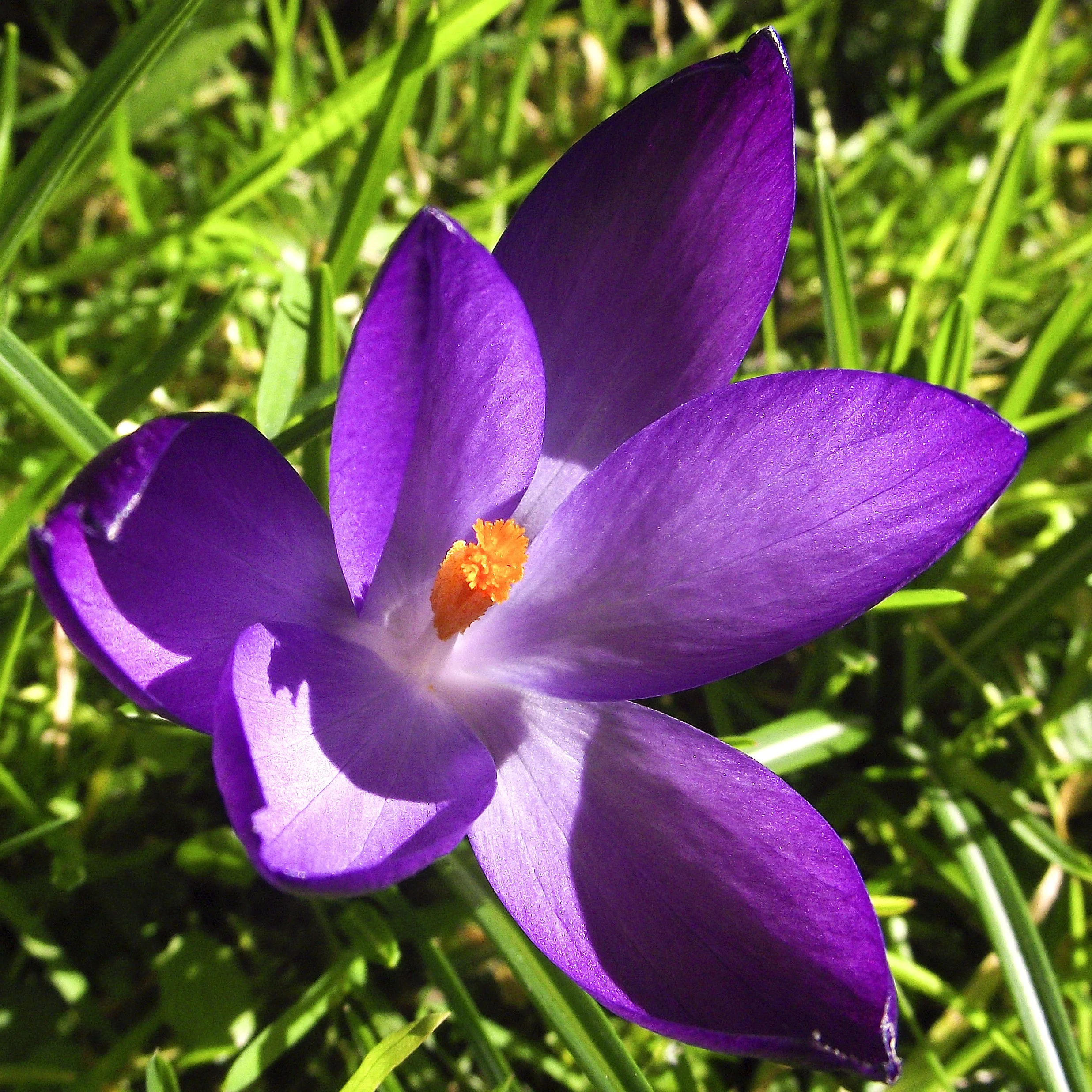
On Facebook, my New England friends post pictures of budding purple crocuses and brave blades of grass emerging after the deluge of snow.
Even in Florida, there are signs of spring (mostly because everyone complains about their allergies) but I smell the orange blossoms and see the palms flowering. The signs are more subtle here and disappear fast into the broiler -commonly known as summer- but before they do, spring is a wonderful time to re-awaken.
There is a rune that looks like a capital I, Isa. When I used to read my runes regularly, I’d always kind of gasp when I’d pull this one because Isa symbolizes “no movement” but to me, that meant stuck. Isa is more accurately described as standstill and metaphorically corresponds to the season of winter, a time of dormancy, of seeds waiting.
When I put my own self-process into the natural life cycle, I quickly understand the need for stasis before activity. This has enabled me to embrace the stillness, the emptiness, the waiting - the winter before spring.
But now this season of gestation is over, the seeds are awakening, ready to germinate and create new life, new beginnings, new opportunities.

Across the globe, signs of spring are here! For those who live where there are distinct seasons, it’s easy to see the world re-awaken with blooming flowers and trees, birds returning and people emerging from their houses.
On Facebook, my New England friends post pictures of budding purple crocuses and brave blades of grass emerging after the deluge of snow.
Even in Florida, there are signs of spring (mostly because everyone complains about their allergies) but I smell the orange blossoms and see the palms flowering.
The signs are more subtle here and disappear fast into the broiler, commonly known as summer.
But before they do, spring is a wonderful time to re-awaken.
There is a rune that looks like a capital I, Isa. When I used to read my runes regularly, I’d always kind of gasp when I’d pull this one because Isa symbolizes “no movement” which to me meant stuck.
Isa is more accurately described as standstill and metaphorically corresponds to the season of winter, a time of dormancy, of seeds waiting.
When I put my own self-process into the natural life cycle, I quickly understand the need for stasis before activity. This has enabled me to embrace the stillness, the emptiness, the waiting - the winter before spring.
But now this season of gestation is over, the seeds are awakening, ready to germinate and create new life, new beginnings, new opportunities.
What does this spring hold for you?
What projects have lain dormant and are now ready to have new life breathed into them?
Spring is a time of shifting so this season may require a re-orientation or perhaps even some re-prioritizing. I suppose that’s why we spring clean – to brush out the old and make way for the new.
For me, it’s simple. There are natural projects that yearn for my attention and it’s time for me to plant and get my hands dirty in the earth. It is also time to delve deeper into a few creative ventures I’m currently undertaking primarily focused on writing and course development.
So as you approach this spring season, what opportunities are lying in wait for you?
Is it time to make a move, start a new class, finish up a project that’s been lingering?
Ask for guidance from within and you’ll know what awaits you. Bring yourself back in alignment with nature and allow this awakening energy to stir your inner voice and creativity.
Be sure to tell us what exciting things spring has in store for you!
Leave a comment right underneath!
Let's make a list of what we plan to accomplish!
Join our ever expanding community. Sign up today! FREE

Stressed by Your To Do List? 4 Simple Strategies to Lighten the Load
I recently got back from a family holiday in France. Because I wanted to be “on vacation,” I’d decided to get a bunch of work done early so I wouldn’t have it hanging over my head while I was away. Sound familiar? We all do this, right?
Naturally, I made a list.
My list included what I needed to do for my business as well as all the personal issues that had to be addressed. Things like paying the mortgage, the electric and cable bills, getting cash for travelling, stopping the mail, etc.
I wrote my list about two weeks before we left. Almost immediately I was stressed out. My mind whirred with, “I have so much to do. I have to hurry to get it all done. The clock’s ticking. I’m running out of time.” My chest started contracting and it was hard to breathe. I’m sure my blood pressure spiked too.
For the first time since I started writing a weekly blog 18 months ago, I had writer’s block.
I literally sat down to start an article and my mind was a complete blank. I had no creativity, no ideas, nothing sounded interesting or compelling.
I just sat there and stared at my computer as the panic rose and the chant continued. “You can’t do this. You have too much to do. You have to get this piece written. Your list is waiting… And nothing.
I finally got up and walked away.

I recently got back from a family holiday in France. Because I wanted to be “on vacation,” I’d decided to get a bunch of work done early so I wouldn’t have it hanging over my head while I was away. Sound familiar? We all do this, right?
Naturally, I made a list.
My list included what I needed to do for my business as well as all the personal issues that had to be addressed. Things like paying the mortgage, the electric and cable bills, getting cash for travelling, stopping the mail, etc.
I wrote my list about two weeks before we left. Almost immediately I was stressed out. My mind whirred with, “I have so much to do. I have to hurry to get it all done. The clock’s ticking. I’m running out of time.” My chest started contracting and it was hard to breathe. I’m sure my blood pressure spiked too.
For the first time since I started writing a weekly blog 18 months ago, I had writer’s block.
I literally sat down to start an article and my mind was a complete blank. I had no creativity, no ideas, nothing sounded interesting or compelling.
I just stared at my computer as the panic rose and the chant continued. “You can’t do this. You have too much to do. You have to get this piece written. Your list is waiting… And nothing.
I finally got up and walked away.
Later that night I confessed to my husband that I had writer’s block. But then I also began to recognize my other symptoms. Stress was causing my mind to short circuit in this panicky thinking. And I felt incredibly uncomfortable in my body.
That’s when I remembered – this is how I used to feel a lot.
I’d forgotten because a few years ago I made a radical shift in my schedule and opted to slow my work life down to feel more sane, whole and loving.
This awful feeling of stress, angst and physical discomfort was how I’d felt for years. It had actually become my norm. There was sooooo much to do and not enough time. I’d run around crazed, in a blurred rush, trying frantically to multi-task and get everything done.
With my list and the time crunch of my impending trip, I’d fallen right back into that place.
That’s when I made a decision because I hated feeling this way.
What was it?
My list had projected me straight into the future. All I had to do was come back to right now, this moment.
How did I do that?
Breathing.
That’s when I had another a-ha.
I couldn’t write because I was stressed. My brain was already onto the next thing on my to-do list when I hadn’t even started the first task, writing. As I allowed myself to relax and breathe, that creative flow began to re-awaken and the next day I was able to complete my piece.
If you can relate to being stressed out and unable to turn off the list in your mind, see if these strategies help:
1. One Thing at a Time
For all that we love the notion of multi-tasking, (especially as women) we can really only do one thing effectively and well at a time. Choose to be present and focused JUST on the activity at hand – be it writing, talking on the phone or cooking dinner.
2. Prioritize the List and Delegate
Does everything really need to get done now? Can someone else do some of it for you? Can anything wait until later?
3. Relax
This was my big key. I had to relax into knowing that everything was fine, everything was going to get done and if it didn’t, oh well. Guess what? Once I relaxed, I knocked off all the stuff on my list no problem and without all the chaos and drama I’d kicked up previously.
4. Breathe
Take nice deep breaths into your body and feel the tension dissolve. Breathing oxygenates the body, clears the mind and re-focuses us right back to now. It gives us instant clarity and a feeling of wakefulness.
Try these and see if your list suddenly becomes manageable and do-able. We always have the choice to fall into stress or to stay present. When we choose presence, we're often surprised at how calm and clear we feel and how effective we can be. Before you realize it, everything’s done!
How do YOU handle stress? Leave me a comment just underneath this blog post!
Be in the know - sign up for my blogs and other news - direct to your inbox free!

Gratitude – the Antidote to More
As an American, I’m pretty good at being a consumer. In fact, I think most of us are. Americans are constantly encouraged to buy. It’s how we fuel our economy. But the underbelly of our consumer economy is the never-ending quest for more.
More manifests itself obviously with technology since technology changes so rapidly.
I suddenly find myself convinced that I need the iPhone 6 even when my current phone works fine. Or I immediately want the Apple watch when I don’t even like wearing watches. And although I just bought a new MacBook, I now must have the lighter than Air model.
But it isn’t just with technology, it’s with everything partly because we strive to keep up with others around us. I need a pair of LeBrons or Timberland boots. I have to get some new Beats by Dre headphones. This April, I simply must have a purse for spring.
Sure enough, buying that new hobo handbag does make me feel happy and satisfied but only briefly because soon my pastel blue purse is passé and I’m hankering for a black one for fall…
This craving for more is a never-ending cycle. It’s a treadmill we get on of wanting more or better - a bigger house, a newer car- and on and on.
What’s the solution? Gratitude
As an American, I’m pretty good at being a consumer. In fact, I think most of us are. Americans are constantly encouraged to buy. It’s how we fuel our economy. But the underbelly of our consumer economy is the never-ending quest for more.

More manifests itself obviously with technology since technology changes so rapidly.
I suddenly find myself convinced that I need the iPhone 6 even when my current phone works fine. Or I immediately want the Apple watch when I don’t even like wearing watches. And although I just bought a new MacBook, I now must have the lighter than Air model.
But it isn’t just with technology, it’s with everything partly because we strive to keep up with others around us. I need a pair of LeBrons or Timberland boots. I have to get some new Beats by Dre headphones. This April, I simply must have a purse for spring.
Sure enough, buying that new hobo handbag does make me feel happy and satisfied but only briefly because soon my pastel blue purse is passé and I’m hankering for a black one for fall…
This craving for more is a never-ending cycle. It’s a treadmill we get on of wanting more or better - a bigger house, a newer car- and on and on.
What’s the Solution? Gratitude
Gratitude Brings Us Back to Now.
Instead of focusing on what we don’t have -the apple watch, the new car- we focus on all that we do have - clean water, loving relationships, a closet full of clothing, 50+ pairs of earrings, a pool, fresh food, healthy children…
Gratitude is a Reorientation.
Think about yourself for a minute. How do you like yourself better?
When You’re in a Place of Wanting or in a Place of Thankfulness?
Does it feel healthier when you think: “If only I had a new office chair, I’d get so much more done…. If I had 20 clients this week, I’d feel successful.”
Versus when your thoughts say: “My office is filled with beautiful sunshine and my desk is large and holds all my work easily. My schedule is flexible and enables me to work with people as well as spend time with my family.”
The Trick is to REMEMBER.
Remember to look around our lives and see all the beauty, abundance, love and happiness that exists right now.
Gratitude is Recognizing and Appreciating What We Have in the Moment.
This way of thinking fills us up with happiness and contentment.
The cycle of more pushes us into a place of lack where we’re constantly left wanting and that pulls us into the future toward more or better.
Instead, if we can use gratitude as a tool, it can easily and simply bring us back to now. Back to feeling satisfied and whole, happy and content.
The next time you find yourself yearning for a new dress or a power tool that you might not need, check in.
Are you feeling happy and grateful for the life you’re living right now?
Or are you trying to fill an emptiness or void through materialism?
Remind yourself how good your life is. Look around at all the abundance you have right now and watch that desire for more slip away.
How does gratitude manifest in your life? Leave me a comment under the blog!
AND If you’re in Vero Beach this weekend,
join us for an afternoon immersed in gratitude.
Click here for more details.
Get my blogs and other treats Free! Sign up today.
Tell me how gratitude impacts your life - write your ideas below!

The Wisdom to Know the Difference
God grant me the serenity to accept the things I cannot change; the courage to change the things I can; and the wisdom to know the difference.
Not long ago, I was at a conference and heard a journalist share about her recent interview with Dr. Wayne Dyer. She’d asked him about the Serenity Prayer, wondering how we can develop the wisdom to know the difference.
Her query got me thinking. How do I know when to surrender and when to act? And then it hit me.
I can only change one thing, ME -- my words, my actions and my thoughts.
When I decide to take control, I’m in charge and responsible for my life. From this place I feel empowered because I can indeed effect change and evolve myself.
Accepting the things I cannot change is harder.

God grant me the serenity to accept the things I cannot change; the courage to change the things I can; and the wisdom to know the difference.
Not long ago, I was at a conference and heard a journalist share about her recent interview with Dr. Wayne Dyer. She’d asked him about the Serenity Prayer, wondering how we can develop the wisdom to know the difference.
Her query got me thinking. How do I know when to surrender and when to act? And then it hit me.
I can only change one thing, ME -- my words, my actions and my thoughts.
When I decide to take control, I’m in charge and responsible for my life. From this place I feel empowered because I can indeed effect change and evolve myself.
Accepting the things I cannot change is harder.
We all want other people to change. Being a recovering perfectionist, I was always attempting to improve family members and in particular, my spouse. It never worked and instead, created more tension, ill will and frustration for both of us.
But even more than wanting to control the people in my life, I felt compelled to heal the world, vacuum up all the smog and carbon in the air, single handedly clean the oceans and rivers. Every time I heard about a natural disaster somewhere my heart hurt and I felt responsible. I had to do something about it.
Then it dawned on me one day that I couldn’t.
I couldn’t magically make everything better (at least not yet). Focusing on all of the negativity oppressed me too, and made me feel helpless. That’s when I had to re-think what I can and cannot change.
I still care about our environment and about the people in my life but now instead of allowing myself to be overwhelmed, I ask what can I do?
I can love and accept my family.
I can recycle, buy local or sustainable products, donate my time or money, drive a hybrid, ride a bike or walk.
I can pray and envision the world I want for my children.
The wisdom lies in the knowing–that all I have control over is me.
At first it can sound limiting and limited. But in reality, when we change ourselves and how we show up in the world, we can change the world. So the next time you’re wondering how to know the difference, ask yourself, “Is this about me or about my need to control or save someone else?” And pretty quickly you’ll have an answer.
How have you interpreted the Serenity Prayer?
Let me know your thoughts.
Leave a comment below!
Receive my weekly emails and other goodies directly to your inbox. Sign up TODAY!

3 Reasons Why Rejection’s a Good Thing
It’s nearly that time of year when high school seniors start hearing from colleges – hoping to be accepted and dreading the rejection letters. I remember those days, the anxiety and nervous energy, waiting to see what the future held.
In the 30 years since I awaited my own set of letters, I’ve learned a lot about rejection. That contrary to popular belief, rejection may not be the enemy, but instead can often be a helpful guide.
I say this because we don’t always know what’s in our best interest. I might think that working for large corporation A is my dream job only to find when they don’t hire me, that small organization B was exactly where I fit and what I needed to both build my skills and open new doors. Rejection offers us a chance to re-think our plan, to realign or challenge our initial beliefs and ensure that where we think we want to go is indeed in our highest and best good.
Here’s How Rejection is Helpful
It’s nearly that time of year when high school seniors start hearing from colleges – hoping to be accepted and dreading the rejection letters. I remember those days, the anxiety and nervous energy, waiting to see what the future held.

In the 30 years since I awaited my own set of letters, I’ve learned a lot about rejection. That contrary to popular belief, rejection may not be the enemy, but instead can often be a helpful guide.
I say this because we don’t always know what’s in our best interest. I might think that working for large corporation A is my dream job only to find when they don’t hire me, that small organization B was exactly where I fit and what I needed to both build my skills and open new doors.
Rejection offers us a chance to re-think our plan -- to realign or challenge our initial beliefs -- and ensure that where we think we want to go is indeed in our highest and best good.
Here’s How Rejection is Helpful
1. We Get What We Need.
When I was a senior in high school, I really wanted to go to Brown University. It was my first choice not because I thought it was the best fit for me but because I wanted to please my parents. Then they could boast that I was at an Ivy League school. I’d also feel validated that I was indeed smart. I didn’t get in – along with 90+ percent of the other applicants. Instead, I went to Boston University.
Initially I felt rejected and lost. How could Brown not want me? I’m not good enough, smart enough… until one day I was listening to that famous Rolling Stones song and was reminded that I might not always get what I want but I get what I need.
I know it’s a cliché, but in that moment a light bulb went on and I realized that was precisely what had happened. I’d worked my tail off in high school and soon discovered that BU was easy for me after the rigor of a private New England prep school. The truth was that I got an amazing education in high school. I’d learned how to think, how to analyze and apply information. What I needed in college was to develop my social and emotional skills so I could both understand myself as well as interact comfortably and confidently with others. And that is exactly what I got.
2. 3s the Charm
About 10 year ago I went to a workshop focused on money and success with Harv Eker. It was one of those marathon weekends where participants work in large hotel conference rooms from early in the morning until nearly midnight.
One of my takeaways from that intensive was to be ready for rejection AND try again. We have to be willing to try at least 3 times to succeed. Most people hear “no” once and give up. Our challenge is to hear “no” and persevere right through that until we hear “yes.”
3. It Isn’t Personal
I recently submitted a book proposal for a competition that a publisher was holding. I didn’t win. At first I was a little shocked but then I told my daughter that they’d received something like 160 entries. She looked at me and said, “Mom, that’s less than a 1% chance!”
I suddenly realized she was absolutely right. And I also reminded myself that it wasn’t a personal rejection. Later, I was talking to an art friend of mine. She said, “I tell everyone – submit, submit submit. Because what a committee will choose today is different than what they’ll choose tomorrow. Don’t be afraid.”
Instantly I knew she was right too. Committees are made of people and they may like Sculpture 1 today and Sculpture 2 tomorrow just as they may like Book X today and Book Y tomorrow.
It’s about how we interpret these momentary set backs.
Do we allow them to shut us down and internalize them to think we’re bad, unworthy or undeserving? Or do we use rejection as fuel to carry on regardless knowing that we’re getting what we need in the moment and that life’s taking us exactly where we need to go.
Like lots of things, it’s a re-frame. When we can look at rejection not like an enemy but instead as a fact of life, a roadblock, or even a helpful guide, it can help us embrace it and learn from it rather than allow it to haunt us.
As I said to my 15 year-old this morning when I dropped her off at school, “Take chances! Challenge yourself.” That’s the way we truly grow by stretching ourselves and being willing to take risks. And built into that is rejection. So we might as well get used to it.
Been rejected?
Share how you managed it below!
Let's start a dialog. Leave a comment, I'd love to hear it.

Moving Through Fear In 3 Easy Steps
Last week I got a call from a woman in tears who confessed that she was incapable of completing even simple tasks anymore, like phoning a sick friend. She then said, “I’m paralyzed by fear.”
My heart went out to her.
Obviously she was in a lot of pain. Sometimes it’s easy to look at people who are successful or brave and feel like they must be cut from a different cloth. They must have mastered fear and no longer have it. We compare ourselves and feel woefully inadequate. Then we can think things like, “That person is so unlike me. I’m just a big scardey cat, afraid all the time.”
I knew this woman felt like she was alone in her suffering.
So I resolved to support her just as I had been helped years earlier to walk through my own fear.
About fourteen years ago, I was a martial arts student, preparing for an upcoming rank test in Tae Kwon Do. This meant I’d have to break a board. I never felt terribly confident in sports and saw myself as clumsy and awkward.
I was slowly working myself into a panic about performing. Not only would I forget the moves for the form I was required to do but I’d get hurt or worse. I’d make a fool out of myself and feel embarrassed in front of the other students, my teachers and family.
I finally said something, knowing I needed encouragement. My teacher, who had also been a spiritual practitioner for more than 30 years, shared his wisdom with me.
Last week I got a call from a woman in tears who confessed that she was incapable of completing even simple tasks anymore, like phoning a sick friend. She then said, “I’m paralyzed by fear.”

My heart went out to her.
Obviously she was in a lot of pain. Sometimes it’s easy to look at people who are successful or brave and feel like they must be cut from a different cloth.
They must have mastered fear and no longer have it.
We compare ourselves and feel woefully inadequate. Then we can think things like, “That person is so unlike me. I’m just a big scardey cat, afraid all the time.”
I knew this woman felt like she was alone in her suffering.
So I resolved to support her just as I had been helped years earlier to walk through my own fear.
About fourteen years ago, I was a martial arts student, preparing for an upcoming rank test in Tae Kwon Do. This meant I’d have to break a board. I never felt terribly confident in sports and saw myself as clumsy and awkward.
I was slowly working myself into a panic about performing. Not only would I forget the moves for the form I was required to do but I’d get hurt or worse. I’d make a fool out of myself and feel embarrassed in front of the other students, my teachers and family.
I finally said something, knowing I needed encouragement. My teacher, who had also been a spiritual practitioner for more than 30 years, shared his wisdom with me.
He said, “Courage isn’t the absence of fear."
"It’s not that people who are brave aren’t afraid. We’re all scared. It’s just about how we manage that fear. Does it prevent us from doing what we want or do we gently put it aside and allow it to be a fellow traveler?”
I loved this idea of managing our fear.
That felt attainable, real. I couldn’t imagine banishing fear forever because that seemed impossible. But I could envision managing it.
After all, fear is part of the human response. It’s helped keep us alive for thousands of years. It’s a natural part of our Sympathetic Nervous System – fight or flight.
The problem only arises when fear gets out of control, almost like it metastasizes and wants to consume us. We can become paralyzed by fear, incapable of taking action. Just like the woman who had called me.
When fear comes in that strongly, sometimes we need clarity, another voice to help us separate from it. And to remember that it’s just an emotion. No matter how all consuming it can feel, it is just that, a feeling.
So, when you’re in that fear place, here are 3 simple ways to get through it:
1. Breathe
And remind yourself that what you're experiencing is just a feeling, an emotion. Fear is NOT who you are.
2. Acknowledge it.
When we try to push fear away, we just make it stronger. Recognize it’s there. Thank it for sharing and then tell it that you’re going to put it aside for now and do _____________ (make that phone call, complete the paperwork, find out about the diagnosis) anyway.
3. Ask for help.
This can come in many forms – a friend, partner, counselor, coach or in prayer. Sometimes during meditation I will tell God, “I’m scared of _________. Help me.” Amazingly I always get relief, support, love and guidance.
It’s true that we are all afraid.
We’re hard wired that way but the good news is it doesn’t have to rule our lives. We can control fear and when we do, we find that our lives are more exciting, and fulfilling. We feel more empowered, supported, guided and present. Enjoy your life more by allowing fear to be your fellow traveler instead of the boss.
Has fear ever prevented you from achieving a goal?
Obviously she was in a lot of pain. Sometimes it’s easy to look at people who are successful or brave and feel like they must be cut from a different cloth.
They must have mastered fear and no longer have it.
We compare ourselves and feel woefully inadequate. Then we can think things like, “That person is so unlike me. I’m just a big scardey cat, afraid all the time.”
I knew this woman felt like she was alone in her suffering.
So I resolved to support her just as I had been helped years earlier to walk through my own fear.
About fourteen years ago, I was a martial arts student, preparing for an upcoming rank test in Tae Kwon Do. This meant I’d have to break a board. I never felt terribly confident in sports and saw myself as clumsy and awkward.
I was slowly working myself into a panic about performing. Not only would I forget the moves for the form I was required to do but I’d get hurt or worse. I’d make a fool out of myself and feel embarrassed in front of the other students, my teachers and family.
I finally said something, knowing I needed encouragement. My teacher, who had also been a spiritual practitioner for more than 30 years, shared his wisdom with me.
He said, “Courage isn’t the absence of fear."
"It’s not that people who are brave aren’t afraid. We’re all scared. It’s just about how we manage that fear. Does it prevent us from doing what we want or do we gently put it aside and allow it to be a fellow traveler?”
I loved this idea of managing our fear.
That felt attainable, real. I couldn’t imagine banishing fear forever because that seemed impossible. But I could envision managing it.
After all, fear is part of the human response. It’s helped keep us alive for thousands of years. It’s a natural part of our Sympathetic Nervous System – fight or flight.
The problem only arises when fear gets out of control, almost like it metastasizes and wants to consume us. We can become paralyzed by fear, incapable of taking action. Just like the woman who had called me.
When fear comes in that strongly, sometimes we need clarity, another voice to help us separate from it. And to remember that it’s just an emotion. No matter how all consuming it can feel, it is just that, a feeling.
So, when you’re in that fear place, here are 3 simple ways to get through it:
1. Breathe
And remind yourself that what you're experiencing is just a feeling, an emotion. Fear is NOT who you are.
2. Acknowledge it.
When we try to push fear away, we just make it stronger. Recognize it’s there. Thank it for sharing and then tell it that you’re going to put it aside for now and do _____________ (make that phone call, complete the paperwork, find out about the diagnosis) anyway.
3. Ask for help.
This can come in many forms – a friend, partner, counselor, coach or in prayer. Sometimes during meditation I will tell God, “I’m scared of _________. Help me.” Amazingly I always get relief, support, love and guidance.
It’s true that we are all afraid.
We’re hard wired that way but the good news is it doesn’t have to rule our lives. We can control fear and when we do, we find that our lives are more exciting, and fulfilling. We feel more empowered, supported, guided and present. Enjoy your life more by allowing fear to be your fellow traveler instead of the boss.
Has fear ever prevented you from achieving a goal?
Share it with us below!
And join our community today, FREE!

Ready To Get What You Want?
I can have the intention to learn how to ride a bike or to lose 20 pounds. I can think about it, visualize it and imagine it but unless I’m willing to take some action towards achieving my goal, it’ll never happen.
Am I going to learn to ride a bike from saying I want to? Not likely. But I’ll master it if I get on it and practice. It’s the same for losing weight. I can write down my intention or say it out loud but unless I do something, nothing will change.
I first heard Marci Shimoff talk about a secret formula for success in her book Happy for No Reason. In it she says she learned this from performance consultant, Bill Levacy. To me, it encapsulates exactly how to use intention and harness its power to create results in your life.
And the best part, it’s really easy to remember.
Here’s the formula: Intention, Attention, No Tension.
In New Age circles, one hears a lot about intention.
“Set your intention. Be clear about what you want. Ask for the what, let God figure out the how.”
And like most things, we do it and have mixed success, right?
But here’s the thing. Intention isn’t enough.

I can have the intention to learn how to ride a bike or to lose 20 pounds. I can think about it, visualize it and imagine it but unless I’m willing to take some action towards achieving my goal, it’ll never happen.
Am I going to learn to ride a bike from saying I want to? Not likely. But I’ll master it if I get on it and practice. It’s the same for losing weight. I can write down my intention or say it out loud but unless I do something, nothing will change.
I first heard Marci Shimoff talk about a secret formula for success in her book Happy for No Reason. In it she says she learned this from performance consultant, Bill Levacy. To me, it encapsulates exactly how to use intention and harness its power to create results in your life.
And the best part, it’s really easy to remember.
Here’s the formula: Intention, Attention, No Tension.
How does it work?
1. Intention
The first thing we have to do is set an intention. Just like above. What do I want?
a. I want to lose 20 pounds
b. I want to have a successful massage practice with 20 clients a week.
c. I want to get As in all of my classes.
Make sure to be specific. Once you’re clear about your intention, write it down. Say it out loud. Hang it up somewhere you can see it. Now it’s time to activate step 2.
2. Attention
How am I going to achieve my goal or intention? What actions, steps, and imagery can help my intention to manifest? Try to make these specific too.
a. Losing Weight
Researching diets or finding a local support group might be a great first step. Once I have some help, the next step is changing eating and exercise habits, slowly. Set goals that are realistic, safe and feel attainable.
b. Successful Massage Practice
Have I tried advertising my massage business locally or attended a networking event? What about referrals from other healthcare practitioners? Have I made a brochure?
c. Getting all As
Am I utilizing a planner to ensure that I get all my work done? Do I have a quiet place to study? Have I scheduled time to get work done?
Putting attention on what I want to accomplish focuses the mind, emotions and actions towards the goal. Think about step 2 like action steps to get a desired outcome (intention). We can write them down and check them off one by one.
Now for step 3. Some people think this is the easiest step while others think it’s the hardest!
3. No Tension
What’s that? Another way to say this is relaxing into the process. I relax, knowing that all my thoughts, visioning and actions will produce an outcome.
We can’t push the river. What do I mean? We have to surrender and allow things to unfold in divine time not on our timeline.
If you’re anything like me, who wants everything done yesterday, it’s often difficult to wait and allow things to unfold naturally. Sometimes when I’m in the middle of striving for my goal it can be hard to grasp why it’s taking so long. Yet, despite my impatience, when I do get results, I always see the magnificence and perfection in the timing.
When I remember to NOT push the river, I can actually float down in it, knowing that divine action is moving me exactly where I need to go. And it feels infinitely better and more fun than being uptight, annoyed and irritated that I’m not getting results fast enough.
Step 3 is about learning how to relax and enjoy the ride, enjoy the wait, enjoy the process. After all, this is what life is, a process.
So try this great and easy to remember formula for success. Use it to manifest what you want. Be sure to let me know how it goes!
Leave a comment below sharing how you'll use this technique!
I'd love to hear it.
Sign up today to get my blogs in your inbox FREE!
Leave your comment below!

5 Ideas for Managing This Anxious World
Worried about the next snowstorm hitting your city or that your flight will be delayed? You’re not alone. In fact, every single one of us experiences anxiety. But when we constantly avoid socializing, excessively sweat before a presentation or are unable to sleep because our minds won’t stop, then anxiety may be taking us over.
According to the National Institute of Mental Health, 40 million Americans or 18% of our population is suffering from this level of anxiety making it the top mental illness diagnosis. Anxiety is clearly the malady of our modern day life.
What Exactly is Anxiety?
Anxiety, as I mentioned earlier, is a normal human response to uncertainty and we experience it often in our lives at work, in school (such as before tests), when we make decisions or if something unexpected arises.
Anxiety becomes a problem when our feelings and thoughts prevent action or cause symptoms that render us unable to cope. These include constant worry, panic, fear and apprehension. There can also be physical symptoms such as sweating, heart palpitations, high blood pressure, and restlessness.
Why Are We So Anxious?

Worried about the next snowstorm hitting your city or that your flight will be delayed? You’re not alone. In fact, every single one of us experiences anxiety. But when we constantly avoid socializing, excessively sweat before a presentation or are unable to sleep because our minds won’t stop, then anxiety may be taking us over.
According to the National Institute of Mental Health, 40 million Americans or 18% of our population is suffering from this level of anxiety making it the top mental illness diagnosis. Anxiety is clearly the malady of our modern day life.
What Exactly is Anxiety?
Anxiety, as I mentioned earlier, is a normal human response to uncertainty and we experience it often in our lives at work, in school (such as before tests), when we make decisions or if something unexpected arises.
Anxiety becomes a problem when our feelings and thoughts prevent action or cause symptoms that render us unable to cope. These include constant worry, panic, fear and apprehension. There can also be physical symptoms such as sweating, heart palpitations, high blood pressure, and restlessness.
Why Are We So Anxious?
Our modern world is exciting and fast. Thanks to technology we’re also hyper connected and constantly exposed to vast quantities of information. It’s simply too much to process.
In addition, anxiety is effortlessly fed by looming uncertainties like the slow economic recovery, rising terrorism, constant environmental stressors, and managing life’s increasingly complex responsibilities.
If we’re forward thinking, we easily become habituated toward worry, fear and anxiety. What’s going to happen? How am I going to manage it? What if I get Ebola?
To cope with anxiety, many people take Benzodiazepine medications such as: Xanax, Ativan, Valium or Klonopin. These pills target the gamma-aminobutyric acid or GABA, a neurotransmitter chemical, enabling the user to feel more relaxed, and less anxious. They can be addicting and often, when a pill wears off, can make a person feel even more anxious.
What Else Can We Do?
Here are 5 Easy Ways to Address Anxiety Without Medication
1. Manage It
The number one thing we can do to help ourselves deal with anxiety is to change our thinking.
Let’s reframe anxiety and accept that it exists, that we will feel it and experience it. Anxiety will never go away because we are hard wired to have it. Instead, we have to manage it and recognize it as a warning.
What Does Anxiety Want to Teach Me Right Now?
Do I need to make sure my car is filled with gasoline before the storm? Should I double check my alarm clock so I won’t be late for the meeting? Anxiety is a natural warning system but it doesn’t have to become a way of life.
2. Be Present
Often we fall into anxious thoughts because we’ve moved ourselves out of the present moment and into a future scenario. We imagine terrible suffering and awful possibilities. To quote Mark Twain, “.. life does not consist mainly -- or even largely -- of facts and happenings. It consists mainly of the storm of thoughts that is forever blowing through one's head.”
Instead, if we can bring our attention back to this moment, most of the time, nothing awful is happening. It’s all in our heads. When I find my mind careening forward and painting scary scenarios, I remind myself to come back to now, back to this present moment.
Then I ask questions like:
Am I safe right now?
Am I supported right now?
Are my children okay?
Am I healthy?
And nearly all the time, the answer is yes.
3. Foster Healthy Mind Habits
Left to its own devices, our minds wander, projecting lots of “what if” scenarios or telling us scary stories and other negative things like: “They don’t like me.” “I’ll lose my job.” ”He’s talking about me.” “They’ll never hire me.” “I won’t have enough money.”
Catching ourselves thinking like this is the first step.
Then we can begin to change those thoughts and shift into healthier patterns. Choosing positive self-talk, reassuring words and kind messages instead. Phrases like:
“I’m doing a good job.”
“I can ask for help if I need it.”
“I’m an excellent money manager.”
4. Limit News
We can also support ourselves by limiting our exposure to the news. Today we can see what is happening across the globe and sometimes that level of knowledge can feed our anxiety. Learning about a military coup or suicide bomber can fuel our fear and propel us into anxiety when, in all likelihood, that occurrence will have no real impact on our lives. Especially avoid watching the news before bed.
5. Exercise
The research that exercise reduces stress and anxiety is overwhelming. We all know it immediately makes us feel better, boosts our immune system and releases endorphins. And yet, when I’m in an anxious state, it can be hard to get myself motivated.
So the best strategies to ensure that exercise is part of your life are to:
Create a regular routine.
- Maybe it’s a walk with friends once a week or an evening yoga class. For me it’s running 4-5 times a week.
- Creating a routine can help us stay exercising even when anxiety appears.
- Maybe it’s a walk with friends once a week or an evening yoga class. For me it’s running 4-5 times a week.
Have a buddy.
Initially it was really hard for me to be self-motivated to exercise.
I relied on my husband to get me going. He loves working out and was like a cheerleader for me.
Another way to have accountability is to meet someone at the gym or studio. Knowing someone is waiting can get you there when you feel unmotivated.
So the next time you find yourself feeling anxious and stressed, try incorporating some or all of the above. If you need more help, reach out to a friend, coach or therapist. There’s no reason to feel oppressed by this life. It’s here for you to be lived and enjoyed to the fullest. So get out there, have fun and live anxiety free!
What do you do for anxiety?
Leave a comment below!
And get my blogs straight to your inbox today, FREE!
When Self-Doubt Rears Its Head
After traveling for two weeks, it was time to fly home. Vacations are like a suspension of “regular life” and then, inevitably, I must come back. I refer to this as re-entry.
Re-entry started for me at the airport, waiting to board my flight. My mind churned with the various tasks I needed to do -- the work, the chores, the responsibilities. I pushed them away, banishing them to the back of my mind. After all, I wasn’t home yet.
But on Monday morning, they came crashing back.
I had to manage my internal dialog so I wouldn’t get overwhelmed. I made a list and got to work.
But the biggest challenge I was facing was self-doubt.
After being away, and feeling removed from everything, I had begun questioning myself. Was I doing the right thing? Should I just give up writing my book and building my business?

After traveling for two weeks, it was time to fly home. Vacations are like a suspension of “regular life” and then, inevitably, I must come back. I refer to this as re-entry.
Re-entry started for me at the airport, waiting to board my flight. My mind churned with the various tasks I needed to do -- the work, the chores, the responsibilities. I pushed them away, banishing them to the back of my mind. After all, I wasn’t home yet.
But on Monday morning, they came crashing back.
I had to manage my internal dialog so I wouldn’t get overwhelmed. I made a list and got to work.
But the biggest challenge I was facing was self-doubt.
After being away, and feeling removed from everything, I had begun questioning myself. Was I doing the right thing? Should I just give up writing my book and building my business?
One of the voices in my head was telling me all the “have-tos” and “shoulds” I needed to do. These felt heavy and burdensome until I realized who was dictating them. My life is in my control. I get to choose what I want to do or not.
The only one putting pressure on me was me.
That felt better.
What did I really have to do? I completed the pressing tasks and attempted to relax and schedule out the rest. But I still had to face the self-doubt I’d allowed to creep in.
Being a Libra and a six on the Enneagram, I wrestle a lot with self- doubt.
I question my decisions and often weigh things out. I look at problems from other people’s perspectives, often seek their advice and am quick to question my own. I’ve been working hard on this quality –- of listening to my own inner guidance -- and there’s only one sure way for me to do that, through prayer and meditation.
This morning’s meditation began with my Course in Miracles lesson, “My thoughts are images that I have made.” I don’t think I could’ve asked for a better lesson for today. It was exactly what I was struggling with.
I was suffering from my own thoughts of self-doubt.
Then I asked God to guide me. What would you have me do today? And the answer I received was this:
Love and accept yourself, even your self-doubt.
I’d fallen into the place of feeling like I needed some kind of confirmation or validation from the world. We often seek success, fame, acknowledgement or note because we want to be deserving of love. What I was reminded of this morning is that I don’t.
I am loved simply because I exist.
I don’t have to be or have or do anything. I am loved because I am here.
I felt the thin veil that was restricting me fall away as those words washed over me. I am loved because I exist. I am love. I love me.
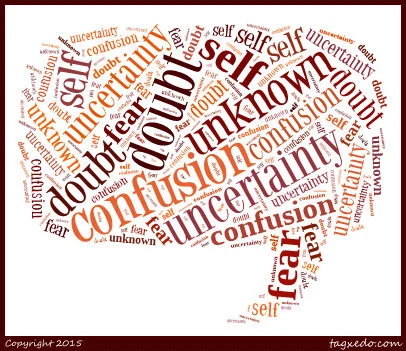
If you’ve ever allowed self-doubt to crowd your mind or make you feel uncertain or confused, tell yourself that you are not your thoughts. Be like a mindful gardener and pull out those thoughts that cause harm.
I was reminded this morning that my only real job is to be the presence of love. But that has to start with me –- with self-love -- with totally accepting myself and every aspect of who I am.
Have you ever felt self-doubt?
How has it affected you?
Share your story below. I’d love to read it.
Be a part of our community!
Sign up to receive blogs and other news today – free.

What’s Motivating You?
How do I get motivated?
Motivation or why we do things is super interesting to me.
I’ve spent a lot of time and energy researching it because I’ve wanted to inspire and motivate – in the classroom, with my clients and with myself.
Recently I was watching Tony Robbins do a Ted Talk. In it, he identified 6 key factors that motivate human behavior.
They are: certainty, uncertainty (or variety), significance, love/connection, growth and contribution.
His 6 characteristics allow us to dig a little deeper into motivation and get into the why behind it.
It’s still January and not too late to start those resolutions. So…

How do I get motivated?
Motivation or why we do things is super interesting to me.
I’ve spent a lot of time and energy researching it because I’ve wanted to inspire and motivate – in the classroom, with my clients and with myself.
Recently I was watching Tony Robbins do a Ted Talk. In it, he identified 6 key factors that motivate human behavior.
They are: certainty, uncertainty (or variety), significance, love/connection, growth and contribution.
His 6 characteristics allow us to dig a little deeper into motivation and get into the why behind it.
If we can identify the why, we can better understand our needs, our thoughts, emotions and ultimately our behavior.
So, let’s walk through these.
Certainty
People who are motivated by certainty crave safety and security. They prefer routine and want life to be predictable and ordered. They’re uncomfortable with change or stretching out of their comfort zones. Is that you?
Uncertainty/Variety
Those who like uncertainty or variety need change, and stimulation. They are easily bored, crave new-ness, and adventure. If you are one of these people, it’s hard to sit at a desk all day doing the same thing. Perhaps these folks find work as tour operators, are self-employed or are entrepreneurs specializing in startups.
Significance
For those seeking significance, they strive to be accomplished, knowledgeable, and worthy of respect. Many people crave to feel important, or relevant and play it out in a myriad of ways. They become an expert in a field, enjoy being the life of the party or crave to be in charge – the boss.
Love/Connection
Love and connection satisfy the need for belonging. As humans, we all want to be loved and feel connected to others. If love and connection are your primary motivators, you seek out a partner, friendships, to be part of a community- at work, socially or perhaps in a church or temple setting.
Both growth and contribution are ways that we self-actualize.
Tony Robbins says that the previous four (certainty, uncertainty, significance and love/connection) are all on the level of personality. Where as these two, growth and contribution, are on the level of the soul.
Growth
Each of us craves growth. It's the natural order of life to grow, learn and evolve. If you’re primarily motivated by growth think of what you fill your life with – books, online courses, goal setting, seeking out teachers and mentors. Perhaps even travel.
Contribution
Lastly, contribution is the ultimate aspect of self-actualization. Stepping out of ourselves and helping others is the most rewarding endeavor. Taking care of another human being, fills us with happiness, peace and love. Recognizing that there is more to do than taking care of me helps me remember that, in truth, we are all one. I can help others and make the world a better place – for that person and for myself.
When we explore why we do things, why we make certain decisions, we can trace them back to our motivation. It’s as if our motivation is calling the shots – giving us the feelings and the words to take action.
Am I calling this person because I want to feel significant or am I doing it because I want to be connected? Maybe I’m trying to contribute?
Am I moving back in with my parents because I need to feel secure or is it so I can grow by going back to school?
When we uncover what those underlying motivations are, it can help us more easily accomplish our goals and objectives.
Sometimes we don’t want to do things and the best way to get unstuck is to understand what’s behind it, what’s motivating you.
So here’s an example. When I found myself at 22 living in Hong Kong, working at a job where I felt neither significant nor connected, but had a constant routine that made me feel like a slave to my desk, I realized I had to make a change. And the things that stood out to me at that time were:
1. Variety
I needed a job where I didn’t have to do the same thing all day long. I needed to move around and do different tasks.
2. Connection
There I was living in a foreign country and I knew next to nothing about Chinese culture and had hardly any friends. I yearned to feel plugged in.
3. Contribution
I wanted to make a difference. To have a job that could help others.
So, what happened?
I became a teacher and it met all of those requirements!
In delving in to our motivations, we can better understand ourselves and move in the directions that feel most fulfilling and rewarding to us. Give it a try!
What’s motivating you?
Let me know by leaving me a comment below.
Sign Up today!
Are Your Beliefs Holding You Back?
Since it’s the middle of January I’ve still got resolutions on my mind. Last week I wrote about turning those resolutions into goals and then taking action by identifying the: what, why, how and when. If you need help with that, download my FREE Goals and Action Step worksheets at :
But if you’ve already done that and are still struggling to get going, it may be time to dig a little deeper and uncover any negative beliefs that might be getting in your way.
What is a belief?
In the simplest definition, a belief is an idea or concept that we believe is true about ourselves, others or the world at large.

Since it’s the middle of January I’ve still got resolutions on my mind. Last week I wrote about turning those resolutions into goals and then taking action by identifying the: what, why, how and when. If you need help with that, download my FREE Goals and Action Step worksheets HERE
But if you’ve already done that and are still struggling to get going, it may be time to dig a little deeper and uncover any negative beliefs that might be getting in your way.
What is a belief?
Stated simply, a belief is an idea or concept that we believe is true about ourselves, others or the world at large.
The first time I heard that definition, I was at a weekend workshop about money and wealth lead by Harv Eker and a light bulb went on. I suddenly realized my beliefs weren’t set in stone. They were just ideas I had decided were true for me. Instantly I got that I was in control AND could change them! It was exciting, thrilling and aweing.
If you’re like I was before I attended that workshop, you probably haven’t spent a lot of time thinking about your beliefs. But here’s the thing, what we believe is dictating how we feel, what we think and how we show up in our lives.
So it’s time to dig in and figure yours out.
How are your beliefs hindering you?
Is the Universe benevolent or dangerous?
Do you deserve success?
Are you loveable?
Your answers to these 3 basic questions can help you identify some core beliefs that may be keeping you stuck.
For example, I used to think that the world was an unsafe place. This belief was developed over years, starting from when I was a young girl. My sister and I went to boarding school the year I turned 8 (and she 7). I had to take care of her. I was scared all the time. Every weekend we traveled from a small town in Connecticut to Manhattan. I constantly felt afraid and alone.
My belief that the world is an unsafe place arose as a response to what I was experiencing.
I decided that I had to be vigilant because no one would be there for me, that there was danger everywhere. These beliefs got solidified over the years every time I was unsupported or rejected.
Since I took that money workshop, I’ve come to see how this basic core belief has severely hindered my ability to trust, take risks, make deep connections, and instead propelled me to hide or check out using food, drugs or alcohol.
Changing Your Beliefs
So, I decided to shift my belief. I wanted to have hope and not fear, feel supported not threatened, be accepted not rejected.
I worked on this using self-reflection and awareness. When I noticed that my body felt anxious or my mind was tense or nervous, I calmed myself with breathing, meditation and positive self talk using affirmations such as: “I am safe in the Universe and all life loves and supports me.”
I also talked about what I was experiencing and feeling with a life coach. I wanted to understand where this belief came from and actively pull it out by its emotional roots. When that process was completed, I had to replace it with a new belief.
If you’re ready to dig in, start by answering those 3 Core Questions from above:
Is the Universe benevolent or dangerous?
Do you deserve success?
Are you loveable?
If you answered any of these in the negative, take a closer look.
Why is it that way?
What happened in your past that lead to this belief?
Are you ready to let those old stories about who you were go?
What can you tell yourself instead?
The process of delving into this might seem scary but it will change your life. The only thing limiting you is you and that starts with your beliefs. So jump in, have fun and reach out if you need any help!
Let me know how it goes by leaving me a comment below or sending me an email.
And if you haven't joined our online community, here's your chance.
Sign Up Today, it's Free!
Nail Your New Year’s Resolutions In 4 Easy Steps
On some level, I think all of us dread one thing about the New Year… resolutions. What we think is lofty or even good for us can soon feel obligatory and for some, even oppressive.
This is why I’ve taken a new attitude on the resolution. We all know that it’s easy after a few glasses of champagne on December 31st to make loads of promises we may or may not keep, right?
So here’s my idea: Turn those resolutions into goals and create some action steps using this
4-Step Process.

On some level, I think all of us dread one thing about the New Year… resolutions. What we think are lofty or even good for us can soon feel obligatory and for some, even oppressive.
This is why I’ve taken a new attitude on the resolution. We all know that after a few glasses of champagne on December 31st, it’s easy to make loads of promises we may or may not keep, right? So here’s my idea:
Turn those resolutions into goals and create action steps using this 4-Step Process.
Step 1. Choose a few resolutions/goals that you really want.
I’ll use an example that many Americans decided on New Year’s Eve - to lose weight.
The first thing I’m going to do, though, is qualify it. What does lose weight mean to me? Do I want to lose 10 pounds or 100 pounds?
Look at your resolution. If it’s too general, make it more specific. I’m going to turn – to lose weight – into:
My Resolution/Goal is: To lose 20 pounds
Step 2. Why did you choose this resolution/goal? Examine your motivation, reason or rationale.
For Step 2, I need to decide on my why. Why weight? Why 20 pounds?
Ask yourself why you want to make this change in your life. The truth is that if we don’t have a good reason, we aren’t going to do it. So dig in, find out what your motivation is!
My answer is because I feel unhealthy.
I can’t fit into my clothes and I’m tired all the time.
I want to both feel good and look good!
Step 3. Implementation – Now that you’re clear about the what (resolution/goal) and the why, the next piece to answer is the how.
a. How are you going to achieve this goal?
b. What specific actions will you take?
c. Do you need to enlist anyone’s help?
Step 3 is critical because this is what needs to occur in order for you to get results. These are the actual steps you will want to take in order to achieve the goal. So in my example, I have to figure out what I’m going to do to really lose 20 pounds. Here are some of my ideas:
Stop drinking sugar drinks (like soda)
Cut out junk food – no fast food, chips or donuts
Walk after dinner with my partner (here I’m enlisting help)
Drink more water
Step 4. Create a timeline – Chunk out your action steps and put dates to them.
The last step is putting it all in motion because it won’t get done if we don’t plan and make time for it, right? Think about your entire year and the benchmarks you want to see over that time. It can be monthly or quarterly. Then think about each and every week, every day and what’s going to happen.
For my resolution, I have a year to lose 20 pounds and I want to do it slowly so I will keep it off.
For Step 4, I have to put my ideas from Step 3 into a timeline.
Weekly:
Starting today, I will stop drinking soda but allow myself one a week.
I will pack lunch instead of buying it except on Fridays when I'll treat myself to lunch out (but not fast food)
Walk after dinner at least 3 times a week – on Mondays, Wednesdays and Thursdays
Everyday, I will drink 8 glasses of water
This week I will buy a water bottle I love and carry it everywhere
Over the Year (Quarterly):
By March 1, I will have lost 5 pounds or I'll start walking 5 times a week
By June 1, I will have lost 10 pounds or I'll stop drinking soda altogether
By September 1, I will have lost 15 pounds or I'll pack my lunch everyday
After school or work today, sit down with those resolutions. Choose the ones that really matter and then walk them through this 4-Step process. What can you start doing this week to make your life better? Change is doable but we need a plan and a timeline. Once you design action steps that work for you, you’ll be amazed at the results! So, grab a paper and pen or sit down in front of your iPad and have fun!
Let me know how it goes. Leave me a comment below.
And join our growing community! It's free.